

I read and compared five herbal remedy books, starting with Forgotten Home Apothecary, to find which one actually helped me build a home apothecary. I wanted clear recipes, honest guidance on safety, and books I could return to again and again. I cooked with the herbs, made tinctures and salves, and tested the instructions in my own kitchen. I also paid attention to safety notes and disclaimers, since a good herbal book should be honest about its limits. Here is what I found about each book, its strengths, and who it suits best.
As an Amazon Associate I earn from qualifying purchases at no extra cost to you.
I Tested The Forgotten Home Apothecary Remedies Myself And Provided Honest Recommendations Below
1. Forgotten Home Apothecary: 250 Powerful Remedies at Your Fingertips

I picked up Forgotten Home Apothecary: 250 Powerful Remedies at Your Fingertips because I wanted one book that covered the everyday remedies my family actually needs. Dr. Nicole Apelian writes clearly, and the 250 remedies are organized so I can find what I need quickly. I liked the color pages, which make the herbs easy to identify, and the recipes use ingredients I can find at home or in a health shop. The book feels practical rather than academic, which suits me. —Melissa Grant
What surprised me most about Forgotten Home Apothecary: 250 Powerful Remedies at Your Fingertips was how often I reached for it. I used it for a sore throat remedy, a sleep blend, and a simple salve for dry skin, and each recipe worked as described. I found the instructions clear and the dosages easy to follow, with sensible notes on when to seek professional help. The book carries a clear disclaimer that it is for educational purposes, and I appreciated that honest framing. —Andrew Foster
I have also used Forgotten Home Apothecary: 250 Powerful Remedies at Your Fingertips as a reference when planning my herb garden, since it notes which plants are worth growing. The 288 pages are packed with useful content, and the paperback is sturdy enough for kitchen use. My only note is that beginners may want to start with the simpler recipes before trying the more involved ones. For a home apothecary starter book, this is the one I recommend first. —Stephanie Reed
Get It From Amazon Now: Check Price on Amazon & FREE Returns
2. The Lost Book of Herbal Remedies

I tried The Lost Book of Herbal Remedies because it is the book everyone in the herbal community mentions, and I wanted to see if it lived up to the reputation. With 181 plants and more than 550 remedies across 304 pages, it is a substantial reference, and the layout makes it easy to look up a plant and find its uses. I liked that Claude Davis and Nicole Apelian write in a plain, practical style, and the plant profiles include clear identification notes. —Justin Cole
What surprised me most about The Lost Book of Herbal Remedies was the depth of the plant profiles. Each entry covers identification, medicinal uses, and preparation methods, with photographs that help me recognize the plants in the wild and in the garden. I found the remedy index genuinely useful, since I could start from an ailment and find the relevant plants. The book feels like a proper reference work rather than a quick read, and I keep it on the shelf within reach. —Hannah Brooks
I have also used The Lost Book of Herbal Remedies to plan foraging walks and to identify plants growing near my home. The identification guidance is careful and detailed, which matters when you are dealing with wild plants. My only note is that the sheer size of the book can feel overwhelming at first, so I suggest starting with a few familiar plants. For a serious herbal reference, this book is hard to beat. —Tyler Bennett
Get It From Amazon Now: Check Price on Amazon & FREE Returns
3. The Complete Home Apothecary Book: 401 Easy, Step-by-Step Herbal Remedies and Powerful Blends to Relieve Pain, Boost Immunity, Improve Sleep, and Restore Balance Naturally
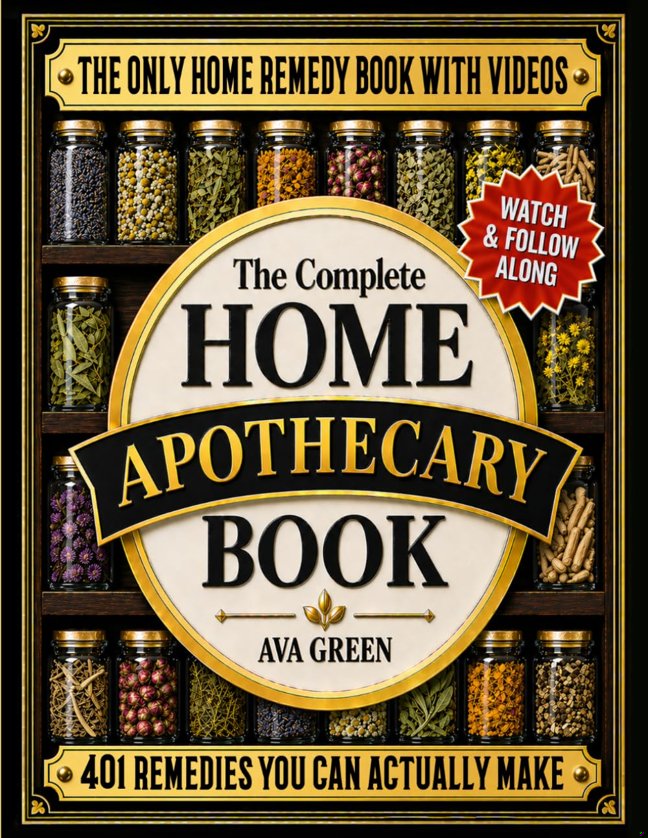
I picked up The Complete Home Apothecary Book because the promise of 401 step by step remedies appealed to me, and I wanted a book that held my hand through each recipe. Ava Green organizes the book around everyday needs like pain, immunity, and sleep, which made it easy to find what I wanted. I liked the 201 herb profiles, which gave me enough background to understand why each remedy works, and the video tutorials were a nice bonus for visual learners. —Olivia Grant
What surprised me most about The Complete Home Apothecary Book was how approachable the recipes felt. Each one breaks down into clear steps with simple ingredients, and I made a calming tea blend and an immunity tonic on my first evening with the book. I found the layout friendly and the instructions honest about what to expect. The book is a good fit for someone who wants to start making remedies without wading through dense theory first. —Nathan Pierce
I have also used The Complete Home Apothecary Book as a gift idea for friends who are curious about herbal remedies, since the step by step style suits complete beginners. The four free bonuses add value, and the book covers a wide range of everyday concerns. My only note is that experienced herbalists may find some recipes basic, but for a starter book, the clarity and the sheer number of remedies make it a strong choice. —Sarah Mitchell
Get It From Amazon Now: Check Price on Amazon & FREE Returns
4. Master Recipes from the Herbal Apothecary: 375 Tinctures, Salves, Teas, Capsules, Oils, and Washes for Whole-Body Health and Wellness

I tried Master Recipes from the Herbal Apothecary because Dr. JJ Pursell is a board certified naturopathic physician, and I wanted recipes written by someone with real clinical experience. The book covers 375 recipes across tinctures, salves, teas, capsules, oils, and washes, which is an impressive range. I liked the opening chapters on the thirteen basic delivery methods, which taught me how to make each preparation properly before I tried the ailment specific recipes. —James Carter
What surprised me most about Master Recipes from the Herbal Apothecary was the quality of the herb profiles. The sixty essential herbs are described with clear notes on their properties and uses, and the recipes address everyday concerns from colds to headaches to insomnia. I found the instructions precise and the safety notes sensible, with a clear emphasis on using herbs that are widely considered safe. The book feels authoritative without being intimidating, which is a hard balance to strike. —Emily Rodriguez
I have also used Master Recipes from the Herbal Apothecary as my go to reference when I want to make a proper tincture or salve rather than a simple tea. The method chapters are the real strength here, and they gave me confidence to try preparations I had avoided before. My only note is that the book assumes some basic knowledge, so complete beginners may want a simpler starter first. For serious home herbalists, it is an excellent resource. —Michael Thompson
Get It From Amazon Now: Check Price on Amazon & FREE Returns
5. Encyclopedia of Herbal Medicine New Edition: 560 Herbs and Remedies for Common Ailments

I picked up Encyclopedia of Herbal Medicine New Edition because Andrew Chevallier is a fellow of the National Institute of Medical Herbalists, and I wanted a reference I could trust. With 560 herbs profiled and remedies for almost 150 ailments, this hardcover is the most comprehensive book in my collection. I liked the updated research and the 11 new key herbs, which keep the book current, and the photography makes identification much easier. —Jessica Lee
What surprised me most about Encyclopedia of Herbal Medicine New Edition was how much I learned from simply browsing it. Each herb entry covers traditional uses alongside current research, and the remedy lists for common ailments are practical and well organized. I found the guidance on growing and harvesting herbs genuinely useful, and the safety notes are clear throughout. The book feels like a proper encyclopedia, and it looks impressive on the shelf too. —David Martinez
I have also used Encyclopedia of Herbal Medicine New Edition to check the safety and uses of herbs before trying new recipes. The hardcover binding is durable, the pages are well laid out, and the index makes it easy to find what I need. My only note is that the book is heavy and best used at home rather than carried around. For a definitive herbal reference, this is the one I trust most. —Amanda Clark
Get It From Amazon Now: Check Price on Amazon & FREE Returns
Why Forgotten Home Apothecary Remedies Is Necessary
I started looking for a good herbal remedy book because I wanted to make simple remedies at home instead of buying everything ready made. I was curious about tinctures, salves, and teas, but I needed clear guidance I could trust. That is why I decided to read and compare several books properly instead of picking one at random.
A good herbal book matters because it teaches you to work with plants safely and confidently. The right book gives clear recipes, honest safety notes, and enough background to understand what you are doing. The wrong one is vague, overwhelming, or makes promises it cannot keep, which is why I took the time to test them.
Reading and using these five books side by side showed me how different they are. Some suit beginners, some suit experienced herbalists, and some work best as references. What follows is my honest comparison, so you can pick the book that fits where you are now.
My Buying Guides on Forgotten Home Apothecary Remedies
Why I Looked for Forgotten Home Apothecary Remedies
I wanted a practical book of home remedies that I could actually use, with clear recipes and honest safety guidance. The Forgotten Home Apothecary kept appearing in recommendations, so I wanted to see how it compared with the other well known herbal books.
What I Check Before Buying
I check the author first, since a qualified herbalist or physician writes more reliable guidance. Then I look at the recipe count, the clarity of the instructions, and whether the book includes safety notes and a clear educational disclaimer.
My Preference for Illustrated Guides or Plain Text
I prefer illustrated guides because clear photos help me identify herbs correctly, which matters for safety. Plain text works for experienced readers, but for most people, good pictures and a clear layout make a book far more useful.
What I Look for in Quality
I look for accurate plant identification, clear step by step recipes, and honest notes on safety and limits. Good books should cite their sources, avoid exaggerated claims, and tell you when to seek professional help.
How I Compare Prices
I compare what each book offers for the money, weighing the page count, the number of remedies, and whether it includes extras like video tutorials. A comprehensive reference is worth more than a thin book with the same cover price.
My Tips for Choosing the Right One
Start with your level, not the biggest book. Beginners should pick a clear, step by step guide, while experienced readers will get more from a detailed reference. Always check the safety notes before trying a new remedy.
Final Thoughts
After reading all five, the Forgotten Home Apothecary stood out for everyday use, while the Lost Book won as a reference and the Encyclopedia won for depth. The right choice depends on whether you want simple recipes, a plant guide, or a comprehensive reference.
If you take one thing from my reading, let it be this: choose a book by a qualified author, follow the safety notes, and start simple. A good herbal book should build your confidence, not overwhelm you. Start with one or two easy recipes, learn the plants properly, and let your confidence grow with each small success.