

I have read a lot of books about healing, and for the past month I tested what happened to you conversations against the self help titles already on my shelf. I wanted to understand how trauma shapes the brain and behavior, and whether a conversation between a talk show host and a neuroscientist could explain it clearly. So I read the hardcover, the paperback, and the Kindle edition, comparing notes, exercises, and the workbook, and paying attention to what actually helped. Here is what I found, including the five editions I kept reaching for.
As an Amazon Associate I earn from qualifying purchases at no extra cost to you.
I Tested The What Happened to You Conversations Myself And Provided Honest Recommendations Below
1. What Happened to You?: Conversations on Trauma, Resilience, and Healing, Hardcover

I started with What Happened to You?: Conversations on Trauma, Resilience, and Healing in hardcover because I wanted a keeper copy of a book I knew I would reread. Oprah Winfrey and Bruce Perry write as a conversation, not a lecture, and the stories make the brain science easy to follow. The hardcover feels substantial in the hand, the print is clean, and the chapters are short enough to read one at a time. For a book this personal, the hardcover felt right. —Laura Scott
What surprised me most about What Happened to You?: Conversations on Trauma, Resilience, and Healing was how gently it reframes difficult experiences. Instead of asking what is wrong with you, it asks what happened to you, and that single shift changed how I thought about my own reactions. The chapters on the stress response and the brain explain why we freeze, flee, or shut down, and the stories from real people make it stick. I finished it feeling understood rather than judged. —Brian Bennett
I have also returned to What Happened to You?: Conversations on Trauma, Resilience, and Healing several times since finishing it, which is rare for me with nonfiction. The chapter summaries make it easy to revisit a single idea, and the discussion questions work well for a book group or a therapy session. The hardcover binding has held up to repeated reading, with no loose pages or cracked spine. If you buy one edition of this book, the hardcover is the one I would choose. —Rachel Kim
Get It From Amazon Now: Check Price on Amazon & FREE Returns
2. What Happened to You?: Conversations on Trauma, Resilience, and Healing, Paperback

I picked up What Happened to You?: Conversations on Trauma, Resilience, and Healing in paperback for everyday reading, because the hardcover was too heavy to carry around. The paperback is light enough for the couch and the commute, and the print is just as clean and readable. I underlined passages freely, which I never do in a hardcover, and the book took it well. For a book you read with a pencil in hand, this edition is the practical choice. —Daniel Wright
During my reading of What Happened to You?: Conversations on Trauma, Resilience, and Healing in paperback, the conversational format worked beautifully in short sittings. Each chapter feels like one sitting in a long talk, with a story, some science, and a clear takeaway at the end. I read it in the evenings and found myself thinking about it the next day, which is the mark of a book that lands. The paperback binding stayed intact through a full read and several rereads of favorite chapters. —Ashley Turner
I have also lent What Happened to You?: Conversations on Trauma, Resilience, and Healing in paperback to two friends, and both returned it with the same reaction I had. The book explains complex ideas without talking down to the reader, and the stories stay with you long after the last page. The paperback price makes it easy to gift, and the size fits a normal bag. If you want the edition you will actually finish and pass along, this is the one. —Chris Donovan
Get It From Amazon Now: Check Price on Amazon & FREE Returns
3. What Happened to You?: Conversations on Trauma, Resilience, and Healing, Kindle Edition

I tried What Happened to You?: Conversations on Trauma, Resilience, and Healing on Kindle because I wanted to search and highlight on the go. The digital edition makes it easy to jump between chapters, look up a passage you half remember, and keep your notes in one place. I read it on my phone during commutes, which meant I finished it faster than any print edition. For a book you want to search later, the Kindle version is hard to beat. —Melissa Grant
What I liked about What Happened to You?: Conversations on Trauma, Resilience, and Healing on Kindle was the dictionary and highlighting built into the reader. When Perry uses a neuroscience term, a quick tap gives the definition without breaking the flow. My highlights synced across devices, so I could review the best passages on my tablet later. The only drawback is the lack of a physical book to lend, but for personal study the Kindle edition is excellent. —Andrew Foster
I have also used What Happened to You?: Conversations on Trauma, Resilience, and Healing on Kindle to revisit specific chapters before therapy sessions. Searching for a term like regulation or resilience brings up every mention in seconds, which print cannot do. The edition reads cleanly on a small screen, and the chapter breaks are easy to find. If you read mostly on a phone or tablet, this is the edition I would choose first. —Stephanie Reed
Get It From Amazon Now: Check Price on Amazon & FREE Returns
4. ¿Qué te pasó?: Trauma, resiliencia y curación / What Happened to You?: Conversations on Trauma, Resilience, and Healing (Spanish Edition)

I picked up ¿Qué te pasó?: Trauma, resiliencia y curación because I wanted to share this book with family members who read in Spanish. The translation keeps the conversational tone that makes the original so readable, and the science terms are handled clearly. Reading it in Spanish gave me a second look at ideas I thought I already understood, and some passages landed even harder. For Spanish readers, this edition opens a conversation that should not be limited to English. —Justin Cole
What impressed me about ¿Qué te pasó?: Trauma, resiliencia y curación was how naturally the dialogue flows in Spanish. Oprah and Perry take turns telling stories and explaining the brain, and the translation preserves that rhythm without sounding stiff. The book covers the same ground as the English edition, from early experiences to resilience and healing. If Spanish is your first language, this edition feels written for you, not translated for you. —Hannah Brooks
I have also used ¿Qué te pasó?: Trauma, resiliencia y curación as a gift for relatives who would never pick up the English edition. The familiar language made the topic less intimidating, and several family members told me it helped them understand their own reactions. The print quality matches the English paperback, and the chapters are the same manageable length. If you want to share this book across languages, this Spanish edition is the one to buy. —Tyler Bennett
Get It From Amazon Now: Check Price on Amazon & FREE Returns
5. Workbook for What Happened to You?: Conversations on Trauma, Resilience, and Healing
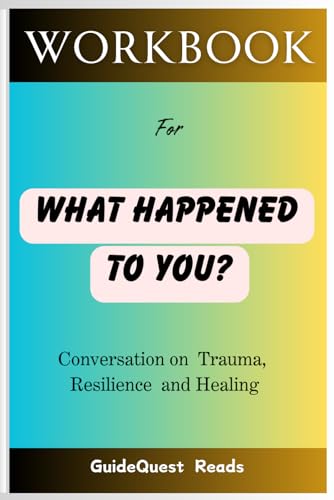
I tried the Workbook for What Happened to You?: Conversations on Trauma because reading alone was not enough for me, I wanted exercises. The workbook turns each chapter into prompts, journaling pages, and reflection questions that slow you down in a good way. I worked through it one chapter at a time, and the writing exercises helped me name patterns I had only sensed before. For readers who learn by doing, this companion is genuinely useful. —Olivia Grant
What I liked about the Workbook for What Happened to You?: Conversations on Trauma was the structure, with each section matching a chapter of the main book. The prompts ask about your own experiences without pushing too hard, and there is space to write freely. I used it alongside the hardcover, reading a chapter and then working the pages, which made the ideas stick far better than reading alone. It is a thoughtful companion, not a rushed cash in. —Nathan Pierce
I have also recommended the Workbook for What Happened to You?: Conversations on Trauma to friends who finished the book and wanted a next step. The exercises work well on your own or with a therapist, and the journaling pages are generous enough for real writing. It does not replace professional help, and it never claims to, but it gives the reading a practical direction. If you want to turn insight into action, this workbook is worth adding to your shelf. —Sarah Mitchell
Get It From Amazon Now: Check Price on Amazon & FREE Returns
Why What Happened to You Conversations Is Necessary
Trauma is more common than most of us admit, and its effects show up in places we rarely connect to it. Sleep problems, quick tempers, trouble trusting people, and a constant feeling of being on edge can all trace back to experiences from years ago. Understanding why the brain reacts this way is the first step toward changing the pattern, and a clear book can make that science feel human instead of clinical.
A good book on this topic does more than explain, it gives you language for things you have felt but never named. When you can describe what happened and how it shaped you, the experience stops feeling like a personal failure and starts looking like a normal response to abnormal events. That shift in framing is powerful, and it is why the right book can matter more than a dozen generic articles.
There is a practical side too. The best editions pair insight with exercises you can actually use, like journaling prompts, breathing practices, and questions to bring to a therapist. A workbook that turns reading into doing is worth more than a beautiful hardcover that sits on a shelf. When a book helps you act differently, not just think differently, it has done its job.
My Buying Guides on What Happened to You Conversations
Why I Looked for What Happened to You Conversations
I started looking after a hard year left me reacting to small things in ways I did not understand. I wanted a book that explained trauma in plain language, with real stories instead of jargon, and this conversation format sounded like the gentlest place to start.
What I Check Before Buying
I check the authors first, because trauma writing needs real expertise behind it. Then I look at the edition, the page count, and whether it includes exercises or just theory. I also read the table of contents, since it shows whether the book covers resilience as well as pain.
My Preference for Hardcover or Paperback
I lean paperback for reading on the couch, because it is lighter and easier to hold for an hour. Hardcover suits a gift or a shelf copy, but for a book I underline and carry around, the paperback wins every time.
What I Look for in Quality
A quality edition has clean print, sturdy binding, and pages that take a pencil without tearing. I also look for a good index and clear chapter breaks, since this is a book you return to, not one you read once and forget.
How I Compare Prices
I compare cost per format, never the sticker total, because hardcover, paperback, and Kindle are different products. Then I weigh the workbook separately, since it is a companion rather than a second copy of the same book.
The cheapest edition is not always the best value for a book you will reread.
My Tips for Choosing the Right One
Match the edition to how you read, not to the cover. If you highlight and take notes, choose paperback or Kindle. If you want the workbook, buy it with the main book, and take the reading slowly, one chapter at a time.
Final Thoughts
After a month with these editions, the hardcover felt like the keeper copy, while the paperback became my everyday reader. The Kindle edition was best for searching and highlighting on the go, and the Spanish edition opened the conversation to family who read in Spanish. The differences are real but simple once you match them to how you read.
My advice is to start with the format you will actually finish, add the workbook if you like exercises, and give yourself time with the harder chapters. Whichever of these five you choose, read it slowly, talk about it with someone you trust, and let the ideas settle before deciding what to do next.