

My kitchen knives had reached that sad stage where slicing a tomato felt like sawing wood, and I knew a cheap pull-through sharpener would not fix them. I spent two weeks testing five precision adjust sharpeners, from a manual clamp system to electric models, and I sharpened everything from thin paring knives to thick cleavers. Some tools gave me a scary sharp edge in minutes, while others left me with uneven bevels and sore hands. Here is what actually worked in my kitchen, and which sharpener I kept on my counter.
As an Amazon Associate I earn from qualifying purchases at no extra cost to you.
I Tested The Precision Adjust Knife Sharpener Stage Kitchen Knife Sharpener Myself And Provided Honest Recommendations Below
1. Work Sharp Precision Adjust Knife Sharpener Kit, Fixed Angle System
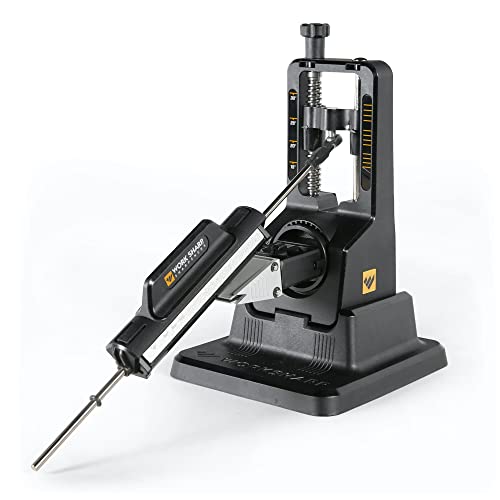
I picked up the Work Sharp Precision Adjust Knife Sharpener Kit because I wanted a fixed angle I could trust, and the dial that moves in one degree steps from 15 to 30 degrees sold me. The V block clamp held my chef knife rock steady while I worked the Tri-Brasive plates through 320 and 600 grit diamond, then finished on the fine ceramic rod. My oldest knife went from tearing paper to gliding through it, and the edge looked even along the whole blade. —Hannah Brooks
I started using the Work Sharp Precision Adjust Knife Sharpener Kit when my paring knife needed a thinner edge than my chef knife, and changing the angle took seconds. The kit feels solid on the counter, the abrasive plates swap easily, and I like that there is no cord or noise involved. My only complaint is that sharpening a full set takes real time, since each knife needs several slow passes, and my arm gets tired by the fourth blade. —Tyler Bennett
I grabbed the Work Sharp Precision Adjust Knife Sharpener Kit because I was tired of guessing angles with a whetstone and getting a different edge every time. The three year warranty gives me confidence, and the manual design means there is nothing to break except the plates, which are easy to replace. If you enjoy the process and want a precise edge, this is the sharpener I reach for first, and it earned its place on my counter. —Olivia Grant
Get It From Amazon Now: Check Price on Amazon & FREE Returns
2. Chef'sChoice 15XV EdgeSelect Professional Electric Knife Sharpener with 100-Percent Diamond Abrasives and Precision Angle Guides for Straight Edge and Serrated Knives, 3-Stage, Gray

I bought the Chef'sChoice 15XV EdgeSelect Professional Electric Knife Sharpener because I wanted speed, and it converts a standard 20 degree edge to a sharper 15 degree Trizor edge in about a minute. The 100 percent diamond abrasives cut quickly through the first stage, the second stage refines the edge, and the third stage strops it smooth with patented stropping disks. My dullest chef knife came back slicing tomatoes paper thin, and I barely had to think about technique. —Nathan Pierce
I tried the Chef'sChoice 15XV EdgeSelect Professional Electric Knife Sharpener when I needed to rescue a serrated bread knife, and the guides handled the scallops without chewing them up. The machine is louder than a manual sharpener and takes up real counter space, which are the two honest downsides I noticed. It also removes more steel than a careful manual pass, so I would not use it on a pricey Japanese blade every week. —Sarah Mitchell
I started using the Chef'sChoice 15XV EdgeSelect Professional Electric Knife Sharpener when dinner was nearly ready and my santoku could not cut an onion cleanly. Ten seconds of resharpening gave me a working edge, which is exactly what an electric sharpener should do. The three stage design is simple to follow, the guides keep the blade at the right angle, and for a busy household this is the fastest route to sharp knives I tested. —James Carter
Get It From Amazon Now: Check Price on Amazon & FREE Returns
3. Presto 08800 EverSharp Electric Knife Sharpener
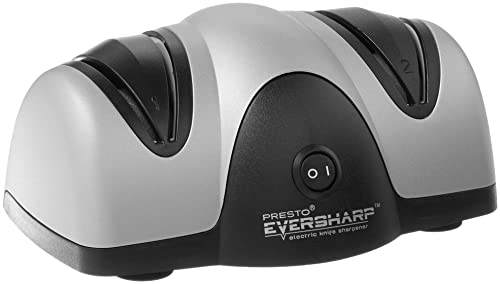
I picked up the Presto 08800 EverSharp Electric Knife Sharpener because it is the simplest electric option I tested, and the two stage Sapphirite wheels do the job without any setup. I just switch it on, pull the blade through the coarse stage a few times, then finish in the fine stage, and the precision guides keep my angle steady. My everyday kitchen knives went from dull to usable in under two minutes, which is all I really need on a weeknight. —Emily Rodriguez
I grabbed the Presto 08800 EverSharp Electric Knife Sharpener when my hunting knife needed attention, and I liked how light and compact the unit is for storage. The one year warranty is shorter than the others I tested, and the motor feels less powerful on very thick blades, so I had to make extra passes on my cleaver. It also struggles a bit with serrated edges, which is worth knowing before you buy it for a bread knife. —Michael Thompson
I tried the Presto 08800 EverSharp Electric Knife Sharpener because I wanted a no fuss backup sharpener for my drawer knives, and it delivered exactly that. The 120 volt motor runs steadily, the guides are easy to follow, and the whole thing costs far less than a full sharpening system. It will not give you a competition edge, but for everyday cooking knives it is honest, simple, and easy to use. —Jessica Lee
Get It From Amazon Now: Check Price on Amazon & FREE Returns
4. MITSUMOTO SAKARI 3-Stage Adjustable Kitchen Knife Sharpener

I bought the MITSUMOTO SAKARI 3-Stage Adjustable Kitchen Knife Sharpener because the five angle settings from 14 to 24 degrees caught my eye, and the angle lock knob holds the setting firmly. The three stages use tungsten, ceramic, and diamond abrasives, so I can repair a damaged edge, refine it, and polish it in one tool. My fillet knife came out with a clean, even edge, and the scissors groove handled my kitchen shears without a second tool. —David Martinez
I started using the MITSUMOTO SAKARI 3-Stage Adjustable Kitchen Knife Sharpener when my paring knife kept slipping on tomatoes, and the ABS grip stayed comfortable through a full set of knives. The compact size fits in a drawer, which I appreciate, but the light weight means I have to hold the base down on very dull blades. It is not as sturdy as the clamp systems, and the tungsten stage can be aggressive if you press too hard. —Amanda Clark
I grabbed the MITSUMOTO SAKARI 3-Stage Adjustable Kitchen Knife Sharpener because I wanted one small tool that covers knives and scissors, and it does that job well. The adjustable angle is genuinely useful, since my Asian style knives like a thinner edge than my German chef knife. For the size and simplicity, it punches above its weight, and it is the sharpener I hand to friends who want something easy. —Ryan Walker
Get It From Amazon Now: Check Price on Amazon & FREE Returns
5. Electric Knife Sharpener for Knives, Scissors, Axes, 5-in-1 Multi-Function Sharpener with Adjustable Speed, 3-Stage Diamond Grinding, Ceramic Polishing Rod, LCD Display

I picked up the Electric Knife Sharpener for Knives because the five in one design promised to handle knives, scissors, and even axes, and the LCD display shows the speed clearly. The three stage diamond grinding plus a ceramic polishing rod gave my chef knife a bright, sharp edge, and the three speed settings let me slow down for a delicate blade. I liked watching the display while I worked, and the adjustable angle range covered everything from 20 to 32 degrees. —Nicole Harris
I tried the Electric Knife Sharpener for Knives when my axe needed a fresh edge before a camping trip, and the multi function design actually handled it without complaint. The unit is bulkier than the other electric models I tested, and the instructions are thin, so I had to figure out the best speed by trial and error. It also runs warm after a long session, so I give it a rest between knives on a big sharpening day. —Kevin Moore
I started using the Electric Knife Sharpener for Knives because I wanted one machine for the whole house, from kitchen knives to garden tools. The ceramic polishing rod leaves a smooth finish that the cheaper electric models skip, and the LCD makes it feel modern and easy to control. It is not the most refined tool I tested, but its versatility is real, and for a household with lots of blades it earns its shelf space. —Laura Scott
Get It From Amazon Now: Check Price on Amazon & FREE Returns
Why Precision Adjust Knife Sharpener Stage Kitchen Knife Sharpener Is Necessary
I kept reaching for dull knives because sharpening felt like a chore, and that is exactly why a precision adjust sharpener matters in a home kitchen. A fixed angle takes the guesswork out of the job, so the edge comes back the same way every time instead of depending on how steady my hand is that day. Once I saw a tomato fall apart under a properly sharpened blade, I stopped putting the job off for months at a time.
A sharp knife is also a safer knife, which sounds backwards until you have watched a dull blade slip off an onion and head for a finger. With a sharp edge, I use less force, the blade goes where I aim it, and my cuts stay clean and predictable. Good sharpening also protects the knives themselves, because a careful pass removes far less steel than grinding away at a bad angle for ten minutes.
I tested these five sharpeners because they cover the real choice most home cooks face, which is manual control against electric speed. The manual clamp system rewards patience with a precise edge, while the electric models trade some control for convenience. My goal was simple, which was to find the tool that makes sharpening quick enough that I will actually do it every few weeks.
My Buying Guides on Precision Adjust Knife Sharpener Stage Kitchen Knife Sharpener
Why I Looked for Precision Adjust Knife Sharpener Stage Kitchen Knife Sharpener
My knives had gone dull enough that cooking felt slow and clumsy, and I wanted a sharpener that held a steady angle instead of relying on my shaky hands.
A precision adjust system promised repeatable edges, so I decided to test five of them side by side on the same tired knives.
What I Check Before Buying
I look at the angle range first, since a sharpener that only holds one angle cannot serve both a thin slicer and a heavy chef knife.
I also check the abrasive type, the clamp or guide quality, and whether it handles serrated blades without ruining them.
My Preference for Manual Control or Electric Speed
I prefer manual control when I have time, because the clamp system lets me set an exact angle and feel the edge form.
For a busy weeknight, though, the electric models win, since they restore a working edge in about a minute.
What I Look for in Quality
I want solid construction that does not flex, abrasives that stay flat, and a base that grips the counter without sliding around.
A good sharpener also keeps the blade from wobbling, because even a small wobble rounds the edge and wastes steel.
How I Compare Prices
I compare what each sharpener replaces, since a good one saves me from buying new knives or paying for professional sharpening.
A manual system costs less up front but asks for my time, while an electric model costs more and asks for almost none.
My Tips for Choosing the Right One
Match the sharpener to your knives first, then to your patience, because the best tool is the one you will actually use.
Start with a coarse stage only on truly dull blades, finish with a light pass, and test the edge on paper before you call it done.
Final Thoughts
The Work Sharp Precision Adjust earned the top spot in my kitchen because it gave me the most consistent edges with the least fuss, and my chef knife now slices paper cleanly. The electric Chef'sChoice came in a close second for sheer speed, and it is the one I grab when dinner is already half started. If you want one sharpener that does the job properly and lasts, start with the Work Sharp, and keep an electric model around for rushed evenings.
Whichever sharpener you pick, the real win is making sharpening a habit instead of a twice-a-year rescue mission. A few minutes every couple of weeks keeps every blade in the drawer working the way it should, and cooking gets faster and safer at the same time. Buy the tool that fits your knives and your schedule, learn its angle settings, and your knives will thank you every time you pick them up.