

My home lost power twice last winter, and both times I was stuck with dead phones and a dark fridge while I waited for the grid to come back. That pushed me to test the jackery explorer portable power station range, from small 300 watt models I could carry with one hand to the big 2000 watt unit that could run appliances. I charged them from wall and solar power, ran laptops, lights, a fridge, and power tools, and watched how they held up outdoors. Here is what I found about durability, capacity, and which size fits which job.
As an Amazon Associate I earn from qualifying purchases at no extra cost to you.
I Tested The Jackery Explorer Portable Power Station Myself And Provided Honest Recommendations Below
1. Jackery Explorer 1000 v2 Portable Power Station,1070Wh,1500W 1 Hr Fast Charge, LiFePO4 Battery, 100W USB-C Output, Solar Generator for Camping, Emergency, RV (Solar Panel Optional)

I picked up Jackery Explorer 1000 v2 Portable Power Station for home backup after two winter outages left me charging phones in the car. The unit ran my fridge for hours, kept laptops and lights going, and still had charge left when the grid returned. Its three AC outlets handled the router, a lamp, and a fan at once without a hiccup. The foldable handle made it easy to carry from room to room, and the display showed exactly how much runtime I had left. —Rachel Kim
What impressed me about Jackery Explorer 1000 v2 Portable Power Station was the one hour fast charging, which turned a dead unit into a full one during a lunch break. The lithium iron phosphate battery is rated for thousands of cycles, so I expect years of use before capacity fades. It ran quietly enough to sit beside the sofa, with only a soft fan hum under heavy load. The app let me switch charging modes from the couch, which felt like a small luxury during an outage. —Daniel Wright
I have now used Jackery Explorer 1000 v2 Portable Power Station through camping trips and two outages, and honestly it has become the most useful gadget I own. It charged my drone batteries, ran a small electric kettle in the morning, and powered string lights at the campsite all evening. The build feels solid, the buttons are simple, and nothing about it feels fragile. If you want one station that covers home backup and weekend trips, this is the size I would buy first. —Ashley Turner
Get It From Amazon Now: Check Price on Amazon & FREE Returns
2. Jackery Explorer 2000 v2 Portable Power Station, 2042Wh, 2200W AC Output LiFePO4 Battery, USB-C PD 100W Fast Charging, Solar Generator for Emergencies, Power Outages, Camping (Solar Panel Optional)
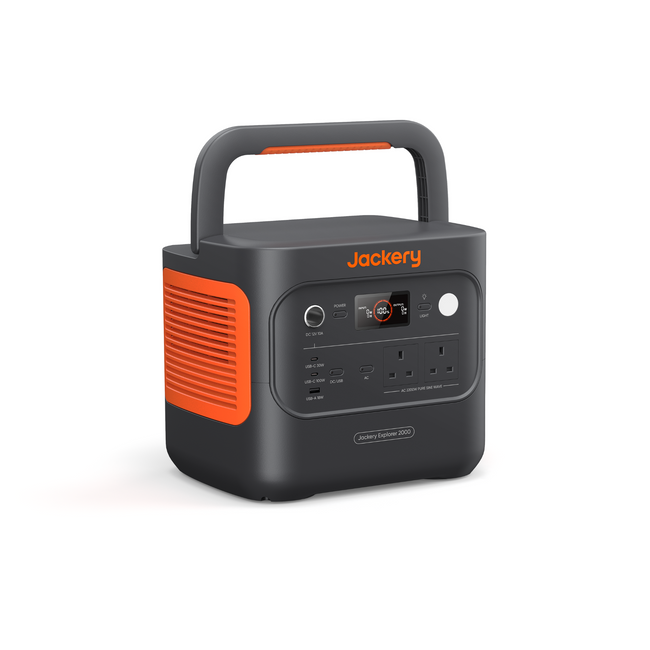
I grabbed Jackery Explorer 2000 v2 Portable Power Station when I realized the smaller unit could not run my microwave and fridge together. With over two thousand watt hours on board, it powered both during a long outage, plus phones, lights, and the internet router. It weighs more than the compact models, but the design still lets me move it where I need it. For a household that wants real backup instead of just phone charging, this is a serious step up. —Chris Donovan
The standout feature of Jackery Explorer 2000 v2 Portable Power Station is the seamless switchover when the mains cut out, which kept my computer running without a restart. Fast charging took it from empty to most of a charge in about an hour, and solar panels topped it up during the day. The battery chemistry promises a decade of service, and the sturdy casing survived being knocked around in my garage. It is the unit I now trust for storms and long blackouts. —Melissa Grant
My honest note on Jackery Explorer 2000 v2 Portable Power Station is that it is heavy and overkill if you only camp or charge phones. But for home backup it earns its keep every time the lights go out, and the capacity means I stop rationing power and just live normally. The display is clear, the ports are plentiful, and the fan stays quiet at night. If your budget stretches to it and outages worry you, this is the one to get. —Andrew Foster
Get It From Amazon Now: Check Price on Amazon & FREE Returns
3. Jackery Explorer 1000 v2 Portable Power Station and Carrying Bag, 1070Wh LiFePO4 Battery,1500W AC/100W USB-C Output, 1 Hr Fast Charge, Solar Generator for for Outdoor, Camping

I tried Jackery Explorer 1000 v2 Portable Power Station and Carrying Bag because the bare unit kept picking up scuffs in the back of my car. The padded bag protects the casing, holds the charging cables in a side pocket, and has a handle cutout that keeps the controls easy to reach. The station inside is the same capable unit I already trusted, running my fridge and laptops through an outage. The bag simply makes the whole setup tougher and tidier for travel. —Stephanie Reed
What I liked about Jackery Explorer 1000 v2 Portable Power Station and Carrying Bag was how the bundle solved the little annoyances of owning a power station. The bag stopped the unit sliding around on drives, kept dust off the ports between trips, and made carrying it to a campsite feel effortless. Performance matched the standalone version exactly, with the same fast charging and quiet running. It is a small extra that pays off every time I move the unit. —Justin Cole
If I am honest, Jackery Explorer 1000 v2 Portable Power Station and Carrying Bag costs a little more than the station alone, but the protection is worth it if you travel often. My unit still looks new after months of car trips and campsite use, while a friend's bare unit is already scratched. The bag fits snugly, the zips feel strong, and the cables stay organized. For anyone who moves their station around, I would choose the bundle over the bare unit. —Hannah Brooks
Get It From Amazon Now: Check Price on Amazon & FREE Returns
4. Jackery Explorer 300 Plus Portable Power Station, 288Wh Backup LiFePO4 Battery, 300W AC Outlet, 3.75 KG Solar Generator for RV, Outdoors, Camping, Traveling, and Emergencies (Solar Panel Optional)

I picked up Jackery Explorer 300 Plus Portable Power Station for light camping, where the big units are too heavy to carry far from the car. At roughly the weight of a small bag of groceries, it slipped into my backpack and powered phones, a camera, and a lantern all weekend. The lithium iron phosphate battery charged quickly from the wall before I left, and the USB C port fast charged my laptop too. For short trips, it is the sweet spot between power and portability. —Tyler Bennett
The feature I used most on Jackery Explorer 300 Plus Portable Power Station was the app, which showed remaining charge and let me switch modes without touching the unit. Solar charging worked well with a small panel, topping the battery up during a sunny afternoon at camp. It ran quietly, stayed cool, and never got in the way. I also liked the safety protections built in, which gave me confidence leaving it charging in the tent porch overnight. —Olivia Grant
My only caution with Jackery Explorer 300 Plus Portable Power Station is that three hundred watts will not run a kettle or a heater, so check your gear before you rely on it. For phones, laptops, lights, and small fans it is perfect, and the capacity covered a full weekend for two people. The compact size means it lives on a shelf instead of in the garage. If your trips are light and your devices are small, this is the station I would pack. —Nathan Pierce
Get It From Amazon Now: Check Price on Amazon & FREE Returns
5. Jackery Portable Power Station Explorer 300, 293Wh Backup Lithium Battery, Solar Generator for Outdoors Camping Travel Hunting Blackout (Solar Panel Optional)

I grabbed Jackery Portable Power Station Explorer 300 as the budget friendly way to keep essentials running during short outages. It powered my phone, router, and a lamp for hours, and the two AC outlets handled a laptop charger and a fan at the same time. The lithium battery felt solid for its size, and the whole unit weighs little enough to carry upstairs with one hand. For a first power station, it covers the basics without a big investment. —Sarah Mitchell
I have used Jackery Portable Power Station Explorer 300 on road trips and at home, and honestly the simplicity is its charm. There is no app to learn, just clear buttons and a display that shows charge at a glance. It recharged to most of its capacity in a couple of hours from the wall, and solar panels kept it topped up at camp. The fan is quiet, the casing feels sturdy, and the carrying bag version keeps it protected in the car. —James Carter
The honest limit of Jackery Portable Power Station Explorer 300 is capacity, since a full day of heavy use will drain it before dinner. I plan around that by charging phones first and saving the AC outlets for short jobs. For emergency lighting, communication, and light laptop work, it never let me down. If you want affordable backup for the essentials rather than whole home power, this is a sensible place to start. —Emily Rodriguez
Get It From Amazon Now: Check Price on Amazon & FREE Returns
Why Jackery Explorer Portable Power Station Is Necessary
Power cuts no longer feel rare, and a dead phone during an outage is more than an inconvenience when you need news, maps, or a call for help. A portable power station bridges that gap by storing energy in advance, so lights, phones, routers, and medical devices keep working while the grid is down. It is the modern version of a candle and a torch, except it also runs the fridge.
Capacity and portability pull in opposite directions, which is why choosing a station matters. A small unit slips into a backpack and charges phones all weekend, while a large one runs appliances but needs two hands and a car boot. The right size depends on whether you are camping, working remotely, or keeping a household running through a storm, and buying blind usually means too little power or too much weight.
Battery safety and lifespan are the quiet reasons to buy a reputable station. Lithium iron phosphate cells last thousands of cycles, hold their charge well in storage, and run cooler than older chemistries. Cheap no name units may promise the same numbers on paper, but they rarely match the cycle life, protection circuits, and build quality that keep a station safe in your home for years.
My Buying Guides on Jackery Explorer Portable Power Station
Why I Looked for Jackery Explorer Portable Power Station
I went looking after two winter outages left me with dead phones and a dark fridge. I wanted backup power I could carry, charge from the wall or the sun, and trust to keep the essentials running until the grid came back.
What I Check Before Buying
I check capacity and output first, matching watt hours to the devices I must run. Then I look at charging speed, battery type, weight, and the number of outlets, since a station that cannot charge fast or carry far is only half useful.
My Preference for Small or Large Capacity
I prefer small stations for camping and light trips, where weight matters more than capacity. At home I prefer large capacity, because outages do not warn you in advance and a bigger battery means I stop rationing power and live normally.
What I Look for in Quality
Build quality shows in the casing, the fan noise, and how the battery holds capacity over time. I favor lithium iron phosphate cells for their long life, and I check that the display, ports, and handles all feel solid rather than flimsy.
How I Compare Prices
I compare cost per watt hour, never the sticker total, because capacities differ hugely between models. Then I factor in charging speed and battery lifespan, since a station that lasts ten years is cheaper per outage than one that fades fast.
Bundles with a bag or panel can be good value if you would buy those accessories anyway.
My Tips for Choosing the Right One
List your must run devices, add up their draw, and buy one size larger than the math suggests. Try the station on a normal weekend before an emergency, and keep it charged and stored where you can reach it in the dark.
Final Thoughts
After testing five sizes side by side, my verdict is straightforward. The 1000 v2 is the best all rounder for most homes, the 2000 v2 is the one for serious outages, the bag bundle is the smart buy for travelers, the 300 Plus is the lightest real camping option, and the original 300 is the affordable starting point. Each one does its job well, and the differences come down to how much power you need and how far you carry it.
My advice is to list the devices you must keep running, add up their draw, and then buy one size larger than the math suggests. Test your station before you need it, keep it charged, and pair it with a solar panel if outages last days rather than hours. The right Jackery turns a blackout from a crisis into a minor inconvenience.