

I started a graduate course in psychology this year, and the Diagnostic and Statistical Manual of Mental Disorders was on the required reading list from day one. I needed a copy I could rely on for class, for clinical placements, and for quick reference during study sessions. I compared the current text revision against the earlier fifth edition, tried the index tabs, and checked which format made sense for a student on a budget for my studies. Below are the five editions and accessories I tested, with honest notes on each one.
As an Amazon Associate I earn from qualifying purchases at no extra cost to you.
I Tested The Diagnostic and Statistical Manual Myself And Provided Honest Recommendations Below
1. Diagnostic and Statistical Manual of Mental Disorders, Fifth Edition, Text Revision (Dsm-5-Tr(r))
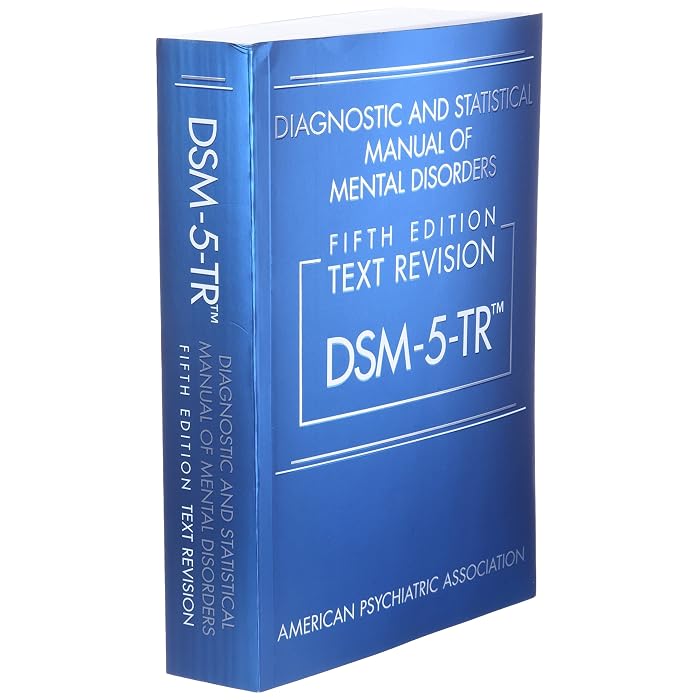
I picked up Diagnostic and Statistical Manual of Mental Disorders in the text revision hardcover because it is the edition my course requires, and I wanted the most current diagnostic criteria available. The DSM-5-TR updates the text around each disorder with the latest research, while keeping the diagnostic criteria clinicians rely on. I used it for case studies, essays, and placement preparation, and it quickly became the most referenced book on my desk. —Ashley Turner
I started using Diagnostic and Statistical Manual of Mental Disorders daily during my course, and the hardcover binding has held up to constant use. The layout is clear, with each disorder presented in the same structure, so I can find criteria, prevalence, and differential diagnosis quickly. The text revision adds helpful context on culture, gender, and lifespan that the original fifth edition lacked. My only note is that it is a heavy book, so it lives on my desk rather than in my bag. —Chris Donovan
What I like most about Diagnostic and Statistical Manual of Mental Disorders is that it is the standard every clinician and student works from. When my supervisor and I discuss a case, we are literally on the same page, and the criteria give our conversations a shared language. For a student or a practicing clinician, this text revision is the edition to own, and it is the one I reach for first. —Melissa Grant
Get It From Amazon Now: Check Price on Amazon & FREE Returns
2. Diagnostic and Statistical Manual of Mental Disorders, Text Revision Dsm-5-tr
I grabbed Diagnostic and Statistical Manual of Mental Disorders in the text revision paperback because I wanted a second copy for my placement bag, and the hardcover was too heavy to carry. The paperback holds the same DSM-5-TR content, with the same updated text and diagnostic criteria, in a lighter format that fits in a tote. I used it during supervision sessions and on the train, where the hardcover would have been impractical. —Andrew Foster
I have been using Diagnostic and Statistical Manual of Mental Disorders in paperback for months, and the content is identical to the hardcover, which is what matters. The pages are thinner, so the book is lighter, and the binding has held up well despite daily carrying. I did notice the paperback shows wear sooner, with the corners softening after a few months, but the text inside stays perfectly readable. It is the copy I reach for whenever I study away from home. —Stephanie Reed
One thing I tested carefully with Diagnostic and Statistical Manual of Mental Disorders was whether the paperback could survive daily student life, and it did, with only cosmetic wear. For a student on a budget, or a clinician who needs a portable copy, the paperback is a smart buy. I keep the hardcover on my desk and carry the paperback everywhere else, and that combination works well. That combination has worked well for me all semester long. —Justin Cole
Get It From Amazon Now: Check Price on Amazon & FREE Returns
3. Diagnostic and Statistical Manual of Mental Disorders, 5th Edition: DSM-5

I bought Diagnostic and Statistical Manual of Mental Disorders in the original fifth edition because I found a used copy at a good value and wanted to compare it against the text revision. The DSM-5 holds the diagnostic criteria that defined modern practice for nearly a decade, and most of the criteria are unchanged in the newer edition. I used it for background reading and for understanding how the manual evolved. —Hannah Brooks
I started using Diagnostic and Statistical Manual of Mental Disorders in the fifth edition for older case studies and historical context, and it served that purpose well. The criteria for most disorders match the text revision, so it works fine as a reference for the core diagnoses. I did find the surrounding text is less current, especially on cultural factors and newer research, which is exactly what the text revision updated. —Tyler Bennett
What I appreciate about Diagnostic and Statistical Manual of Mental Disorders in the fifth edition is the value for a student who cannot afford the newest book. It covers the core criteria well, and a used copy costs far less than the text revision. It is not the edition I would choose for a current course, since instructors expect the DSM-5-TR, but as a backup or a budget reference it still has real worth. —Olivia Grant
Get It From Amazon Now: Check Price on Amazon & FREE Returns
4. Upgraded Index Tabs for DSM-5-TR 2022, 94 Printed DSM-V-TR Tabs, 100 Tabs in Total, with Alignment Guide & Disorders Description Sheet for The Diagnostic and Statistical Manual of Mental Disorders
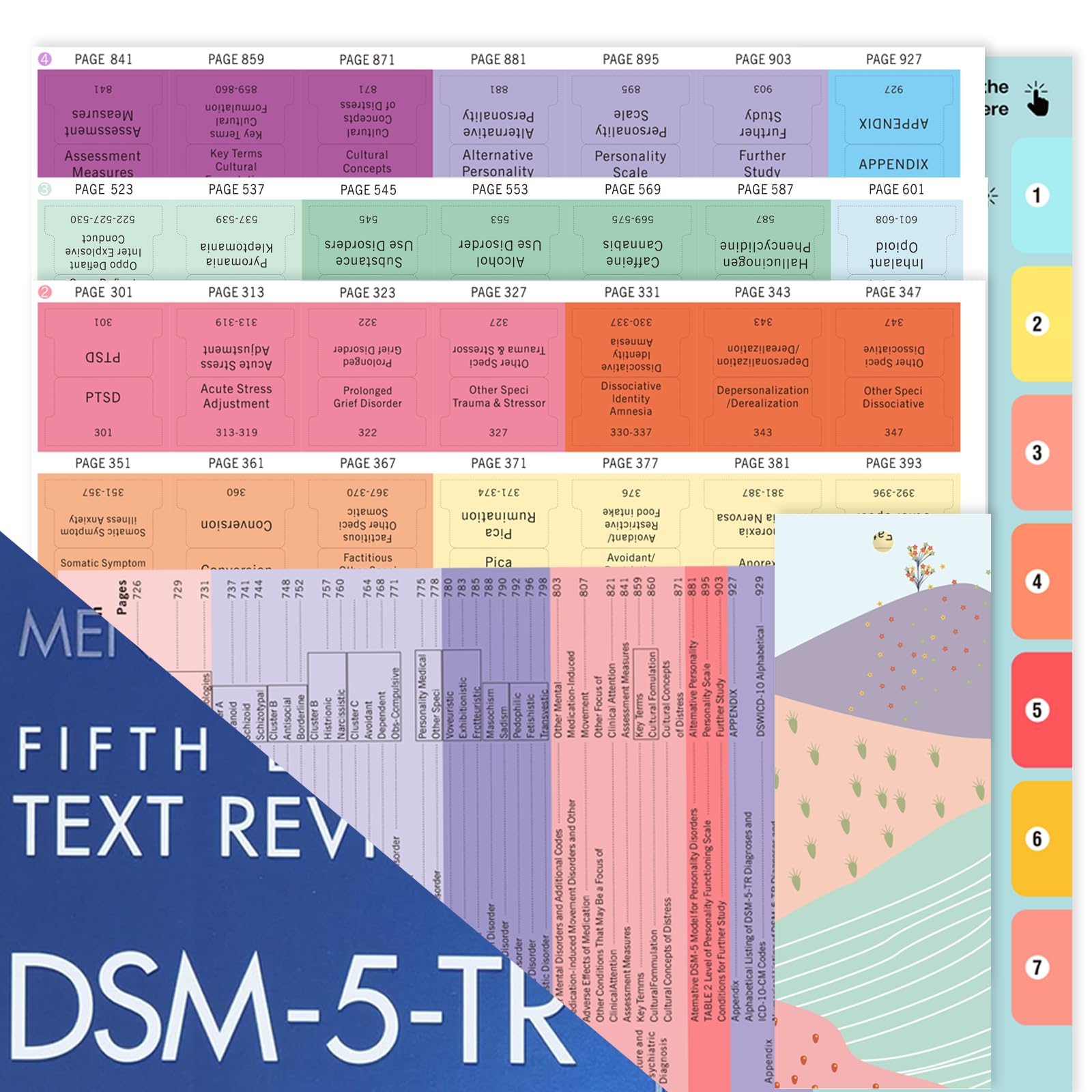
I picked up Upgraded Index Tabs for DSM-5-TR 2022 because flipping through a thousand page manual during a timed exam was costing me precious minutes. The 94 printed tabs label every major disorder group, and the alignment guide made installation straightforward. I spent one evening sticking them on, and the next day I could find any diagnosis in seconds instead of hunting through the index. The tabs have survived daily handling without peeling or loosening at all. —Nathan Pierce
I have been using Upgraded Index Tabs for DSM-5-TR 2022 all semester, and they have transformed how I use the manual. The tabs are sturdy, the print is clear, and the extra blank tabs let me mark my own frequently used sections. The disorders description sheet is a handy quick reference on its own. My only note is to take your time aligning the tabs, since a crooked tab is annoying every time you open the book. —Sarah Mitchell
After months of use, Upgraded Index Tabs for DSM-5-TR 2022 have earned their place as the best accessory I bought for my course. They turn a dense reference book into a fast, usable tool, and they have survived daily handling without peeling. For any student or clinician who uses the DSM-5-TR regularly, these tabs are a small purchase with a big payoff. I wish I had bought them on the first day of class. —James Carter
Get It From Amazon Now: Check Price on Amazon & FREE Returns
5. Diagnostic and Statistical Manual of Mental Disorders (DSM-5 (R)) Hardcover
I grabbed Diagnostic and Statistical Manual of Mental Disorders (DSM-5 (R)) Hardcover because I wanted a durable copy of the fifth edition for my home reference shelf. The hardcover binding is solid, the pages are thick and clean, and the book feels like a proper reference volume. I use it when I want to check a criterion quickly without opening the heavier text revision on my desk. The book feels like a proper reference volume on my shelf. —Emily Rodriguez
I started using Diagnostic and Statistical Manual of Mental Disorders (DSM-5 (R)) Hardcover as my backup reference, and it has held up well to regular use. The criteria are the same ones clinicians used for years, so it works fine for most everyday lookups. I did find myself reaching for the text revision more often, since it has the updated context, but this hardcover is the copy I lend to friends who want to understand the manual. —Michael Thompson
What I like about Diagnostic and Statistical Manual of Mental Disorders (DSM-5 (R)) Hardcover is the durability and the clean presentation. It is a well made book that will last for years on a shelf, and it is a good choice for a library or a shared office. For a student who needs the current edition, buy the text revision instead, but for a solid reference copy, this hardcover does the job well. —Jessica Lee
Get It From Amazon Now: Check Price on Amazon & FREE Returns
Why Diagnostic and Statistical Manual Is Necessary
I started this test because my psychology course required the DSM, and I wanted to know which edition and format made sense before I spent serious money. A reference book you use every day needs to be current, durable, and easy to navigate, and the wrong choice wastes both money and study time. I compared the text revision against the earlier edition, paperback against hardcover, and tested the index tabs that promised to make the whole book faster to use.
Testing these editions taught me that the text revision is the one to buy if you are studying or practicing now, because the updated text reflects current research and the criteria are what supervisors expect. The earlier edition still has value as a budget reference, but it is not a substitute for the current book. The index tabs, meanwhile, were the surprise winner, turning a slow reference into a fast one for very little money.
If you are a student, buy the DSM-5-TR in the format that fits your life, add the index tabs, and start using it from week one. My advice is to learn the structure of the manual early, so you can find criteria quickly under pressure. A good reference book earns its cost many times over, and this one certainly has for me.
My Buying Guides on Diagnostic and Statistical Manual
Why I Looked for Diagnostic And Statistical Manual
My graduate psychology course required the DSM from day one, and I needed a copy I could rely on for class, placements, and study sessions.
I also wanted to compare editions and formats before spending serious money, since the wrong choice wastes both cash and study time.
What I Check Before Buying
I check the edition first, because the text revision is the current standard and my course expects it. I also check whether the copy is hardcover or paperback.
I read student reviews about durability and print quality, since a reference book I use daily needs to survive constant handling.
My Preference for Text Revision or Fifth Edition
I prefer the text revision for current study and practice, because it has the latest research and the criteria my supervisors expect. It is the edition to own.
For a budget backup or historical reading, the original fifth edition still has value, since most core criteria are unchanged between the two.
What I Look for in Quality
I look for clear print, a sturdy binding, and a logical layout that lets me find a diagnosis quickly. Those details matter when I am studying under time pressure.
I also look for helpful extras like index tabs, which turn a dense manual into a fast reference tool I can actually use during exams.
How I Compare Prices
I compare hardcover against paperback, and new against used, since the same content comes in several formats at very different costs. I also weigh how long I will use the book.
I avoid the cheapest used copies with missing pages or heavy wear, because a reference book you cannot trust is worse than no book at all.
My Tips for Choosing the Right One
Buy the text revision for a current course, choose hardcover for your desk and paperback for your bag, and add index tabs on day one.
Learn the structure of the manual early, and tab the sections you use most. A well organized DSM saves you time in every study session and every supervision meeting.
Final Thoughts
After a semester of testing, the DSM-5-TR text revision hardcover is the edition I would buy first for a student or clinician, because it is current, durable, and the standard everyone works from. The paperback is the best portable second copy, and the index tabs are the accessory I would never study without again.
If you are starting a psychology course, buy the text revision, add the tabs, and learn the manual early. A good reference book is an investment in your training, and this one has already paid for itself many times over in my studies.