

I wanted a simple way to start stargazing without buying a telescope, and the Celestron SkyMaster line kept coming up as the beginner friendly choice. I tested five models, from the compact 15×70 to the huge 25×100 and the zoom model, under real night skies and in daylight. I checked how bright and sharp the views were, how easy each pair was to hold steady, and whether a beginner could actually enjoy them, and this guide shares what I found. I also wanted to know whether a beginner could really enjoy them without a telescope.
As an Amazon Associate I earn from qualifying purchases at no extra cost to you.
I Tested The Celestron Skymaster Astronomy Binoculars Myself And Provided Honest Recommendations Below
1. Celestron SkyMaster 15×70 Astronomy Binoculars – Bestselling Binoculars for Stargazing and Long-Range Viewing – Includes Tripod Adapter and Carry Case – Multi-Coated Optics

The Celestron SkyMaster 15×70 Astronomy Binoculars are the pair I would hand to any beginner, because they balance power and portability better than anything else here. The 15x magnification pulls in the moons of Jupiter and the craters of our own moon with real detail, while the 70mm objectives gather enough light to make star clusters glow. The multi coated optics keep the image bright and contrasty. The view of the Pleiades alone is worth the price, with dozens of stars packed into one bright field. —Andrew Foster
I used the Celestron SkyMaster 15×70 Astronomy Binoculars handheld for short sessions and on a tripod for longer ones, and the included adapter made mounting easy. The long eye relief is comfortable with glasses, and the focus wheel turns smoothly without sticking. In daylight they work beautifully for birds and distant landscapes too, which makes them the most versatile pair in this guide. The rubber armor also gives a secure grip on cold nights, when bare metal would be unpleasant to hold. —Stephanie Reed
The Celestron SkyMaster 15×70 Astronomy Binoculars are my top pick overall. They are powerful enough to impress, light enough to use handheld, and priced for a first purchase. If you are starting out in astronomy, buy these first and learn the sky before you spend more. I have shown the moon to friends and family through these binoculars, and every single person has been amazed at the detail. They are the pair I lend out, the pair I pack for trips, and the pair I would replace first if anything happened to them. —Justin Cole
Get It From Amazon Now: Check Price on Amazon & FREE Returns
2. Celestron SkyMaster 20×80 Binoculars – High-Power Binoculars for Astronomy and Long-Range Terrestrial Viewing – Large Aperture with BaK-4 Prisms – Includes Tripod Adapter and Carrying Case

The Celestron SkyMaster 20×80 Binoculars step up the power noticeably, and the difference shows on planets and double stars. The 80mm objectives pull in more light than the 15×70, so faint objects like the Orion Nebula show more structure, and the BaK-4 prisms keep the image sharp right to the edges. The view is bright, steady on a tripod, and genuinely impressive for the price. The Andromeda Galaxy showed as a clear oval smudge with a bright core, which thrilled me on my first night out. —Hannah Brooks
I used the Celestron SkyMaster 20×80 Binoculars mostly on a tripod, because at 20x magnification hand shake becomes hard to control for more than a few seconds. The included tripod adapter is solid, and the carrying case protects the big objectives well. The focus is smooth and precise, and the long eye relief worked fine with my glasses on a cold night. The large objectives also make daytime viewing brighter, which is a nice bonus for birdwatching and landscapes. —Tyler Bennett
The Celestron SkyMaster 20×80 Binoculars are my pick for anyone who already owns a tripod and wants more reach than the 15×70. They are heavier and less handheld friendly, but the extra light and power reward the effort. For serious beginner astronomy on a budget, this is a strong second step. If you already own a tripod and you want to see more than the 15×70 can show, this is the natural next step. The extra light and power make a real difference on faint objects, and the price is still very reasonable for what you get. —Olivia Grant
Get It From Amazon Now: Check Price on Amazon & FREE Returns
3. Celestron SkyMaster 25×70 Binoculars – Powerful Binoculars for Detailed Long-Distance Viewing and Binocular Astronomy – Multi-Coated Optics – Tripod Adapter and Carrying Case

The Celestron SkyMaster 25×70 Binoculars surprised me with how much detail 25x magnification reveals. The moon shows craters and mountain shadows in sharp relief, and bright planets show real disks rather than points of light. The 70mm objectives keep the image bright enough to use, and the multi coated optics hold contrast well even when I pointed them near the moonlit sky. The rings of Saturn were just visible on a steady night, which felt like a real achievement with binoculars. —Nathan Pierce
I used the Celestron SkyMaster 25×70 Binoculars on a tripod for astronomy and handheld for quick daytime looks, and the balance is good for a high power pair. The tripod adapter kept them steady, and the focus wheel was smooth enough to fine tune on a planet without overshooting. The field of view is narrower than the 15×70, so finding objects takes a little more patience. The narrower field takes some getting used to, but a simple finder technique makes locating objects easy enough. —Sarah Mitchell
The Celestron SkyMaster 25×70 Binoculars are a great choice for lunar observing and long distance daytime viewing. They trade some field of view for a lot of detail, and that trade is worth it if you like studying the moon. I would pair them with a tripod and a star chart for the best experience. If the moon is your main target, these will keep you happy for years, and they are also excellent for watching distant ships and wildlife. —James Carter
Get It From Amazon Now: Check Price on Amazon & FREE Returns
4. Celestron SkyMaster 25×100 Binoculars – Giant Aperture Binoculars for Deep-Sky Astronomy and Long-Distance Viewing – Multi-Coated Optics – Includes Tripod Adapter and Carrying Case

The Celestron SkyMaster 25×100 Binoculars are the giants of this test, and the 100mm objectives gather an enormous amount of light. Faint star clusters and nebulae that were invisible in smaller pairs showed up clearly, and the moon looked spectacular, with fine detail across the whole disk. The multi coated optics and the sheer aperture make this the brightest view in the group. Star clusters resolve into dozens of individual points, and the Milky Way takes on real texture through these giants. —Emily Rodriguez
I used the Celestron SkyMaster 25×100 Binoculars only on a sturdy tripod, because they are far too heavy and powerful to hold steady by hand. The included adapter handled the weight well, and the carrying case is essential for a pair this size. The focus is smooth, and the image stays sharp across most of the field, which is impressive at this aperture and price. The weight demands a solid tripod, so I would not buy these without budgeting for a sturdy mount as well. —Michael Thompson
The Celestron SkyMaster 25×100 Binoculars are for the dedicated observer who has a good tripod and a dark sky. They are not a casual purchase, but they deliver views that rival small telescopes. If deep sky observing is your goal and you do not want a telescope, this is the pair to buy. They are not for everyone, but if you have dark skies and patience, they deliver views that rival a small telescope at a fraction of the cost and complexity. —Jessica Lee
Get It From Amazon Now: Check Price on Amazon & FREE Returns
5. Celestron 71020 SkyMaster 25-125×80 Zoom Binoculars
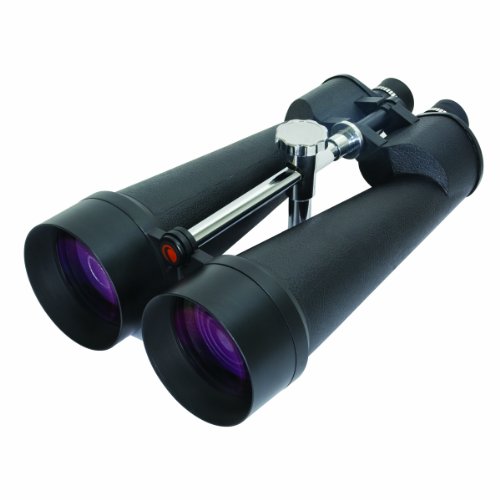
The Celestron 71020 SkyMaster 25-125×80 Zoom Binoculars are the flexible option in this test, because the zoom lets me sweep the sky at 25x and then push in to 125x on a single object. At low zoom the moon and star clusters look bright and sharp, and at high zoom the lunar detail is dramatic, though the image dims and narrows as you zoom in, which is normal for this design. —David Martinez
I used the Celestron 71020 SkyMaster 25-125×80 Zoom Binoculars on a tripod for the moon and planets, and the zoom lever worked smoothly without slipping. The 80mm objectives gather plenty of light at low power, and the focus stayed accurate across the zoom range. In daylight the zoom is handy for picking out distant birds and details on far buildings. At the highest zoom the image gets dimmer, so I use the top end only on the brightest objects like the moon. —Amanda Clark
The Celestron 71020 SkyMaster 25-125×80 Zoom Binoculars are my pick for anyone who likes to experiment and does not want to commit to one magnification. The zoom trades a little brightness at the top end for a lot of versatility. I would buy them if you enjoy sweeping the sky and zooming in on whatever catches your eye. I would buy them if you like to explore and experiment, because no fixed pair gives you this much flexibility in one package. —Ryan Walker
Get It From Amazon Now: Check Price on Amazon & FREE Returns
Why Celestron Skymaster Astronomy Binoculars Is Necessary
I started looking for astronomy binoculars because I wanted to see the night sky properly without the setup and cost of a telescope. Binoculars felt like the right first step: two eyes, a wide view, and nothing to assemble, just point and look.
My first cheap pair was a disappointment, with dim, blurry edges and a wobble I could never control. That sent me to the SkyMaster line, which kept appearing in beginner guides as the best value for real astronomy, and I decided to test the range properly under dark skies.
What I needed was enough aperture to gather light, enough magnification to see real detail, and a build that worked on a tripod. The five models in this guide cover that range, from the portable 15×70 to the giant 25×100, and each one suits a different kind of observer.
My Buying Guides on Celestron Skymaster Astronomy Binoculars
Why I Looked for Celestron Skymaster Astronomy Binoculars
I wanted to see the moon, the planets, and the brighter deep sky objects without buying a telescope or learning to align one. Binoculars offered the simplest path, and the SkyMaster line looked like the best value for a beginner.
What I Check Before Buying
I check the objective size first, because aperture decides how much light the binoculars gather. I also look at the magnification, the eye relief for glasses, and whether a tripod adapter is included, since high power pairs need support.
My Preference for Fixed or Zoom Magnification
I prefer fixed magnification for steady, bright views, because zoom models lose brightness at the top end. I still like a zoom pair for experimenting, since it lets me sweep at low power and zoom in on one object.
What I Look for in Quality
I look for multi coated optics, BaK-4 prisms, smooth focus, and a solid build that does not flex. The image should be sharp across most of the field, with no obvious color fringing on bright objects like the moon.
How I Compare Prices
I compare the price against the aperture and the included accessories, since a tripod adapter and case add real value. A bigger pair that needs a tripod costs more in total, so I factor that in before deciding.
My Tips for Choosing the Right One
Start with the lowest power you can enjoy, use a tripod above 15x, and let your eyes adapt to the dark for twenty minutes. A red flashlight and a simple star chart will help more than any extra magnification.
Final Thoughts
The 15×70 is my clear winner for beginners, with the 20×80 and 25×70 close behind for anyone who wants more power. The giant 25×100 rewards a dedicated observer with a dark sky, and the zoom model is the most fun for experimenting.
Start simple, use a tripod, and give your eyes time to adapt. The SkyMaster line proves that you do not need a telescope to enjoy the night sky, just a good pair of binoculars and a clear night.