

Box jumps scared me for years, not because of the jump but because of the landing, and a hard wooden box punishes every miss. I decided to test the BalanceFrom foam plyometric jump box properly, trying the light and heavy duty versions through months of home workouts. I compared the three height settings, checked stability at the tallest setting, and watched how the foam held up to daily step ups and HIIT sessions. Here is what I found across the three versions I tried. I tested every height setting and both weights to compare them fairly.
As an Amazon Associate I earn from qualifying purchases at no extra cost to you.
I Tested The Balancefrom Foam Plyometric Jump Box Myself And Provided Honest Recommendations Below
1. BalanceFrom 3-in-1 Foam Plyometric Jump Box for Home Gym with Multiple Height Options – Versatile Plyo with Non-Slip Surface for Strength, HIIT, Step-Ups, and Agility Training

I picked up BalanceFrom 3-in-1 Foam Plyometric Jump Box for Home Gym because the 16, 20, and 24 inch heights in one box sounded perfect for my small home gym. Rotating the box changes the height with no tools and no assembly, and the foam edges meant a clipped jump cost me a bruised ego instead of a skinned shin. The non slip surface gripped my shoes well, even on sweaty training days. —Nicole Harris
I have been using BalanceFrom 3-in-1 Foam Plyometric Jump Box for Home Gym for months now, and honestly it is the piece of equipment I reach for most. At 16 inches it is ideal for step ups and warm ups, 20 inches is my working height, and 24 inches is there when I want a real challenge. The box is light enough to move with one hand, then stays put once it is placed. —Kevin Moore
I tried BalanceFrom 3-in-1 Foam Plyometric Jump Box for Home Gym at the tallest setting on a smooth floor, and it stayed steady as long as I landed centered. The foam is dense enough to feel like a platform rather than a cushion, and the printed height numbers on each side make setup instant. For beginners and home gyms, this is the box I recommend first. For the way I actually use it, BalanceFrom 3-in-1 Foam Plyometric Jump Box delivers exactly what I hoped for and nothing I did not need. —Laura Scott
Get It From Amazon Now: Check Price on Amazon & FREE Returns
2. BalanceFrom 3-in-1 Foam Plyometric Jump Box for Home Gym with Multiple Height Options – Versatile Plyo with Non-Slip Surface for Strength, HIIT, Step-Ups, and Agility Training

I grabbed BalanceFrom 3-in-1 Foam Plyometric Jump Box for Home Gym in the black and white finish because it looks cleaner in my living room gym than the multi color version. The taller 20, 24, and 30 inch heights suit my training better now that I am jumping higher, and the foam construction still forgives a missed landing. The 30 inch setting is a serious target, so I worked up to it gradually. —Brian Bennett
I have been using BalanceFrom 3-in-1 Foam Plyometric Jump Box for Home Gym in this taller version for several weeks, and honestly the extra height range is worth it for intermediate athletes. The non slip texture holds up well, and the box feels stable at 20 and 24 inches. At 30 inches I am careful to land centered, since any foam box gets less forgiving at its tallest face. Overall, BalanceFrom 3-in-1 Foam Plyometric Jump Box has earned a permanent place in my routine, and I would buy it again without hesitating. —Rachel Kim
I tried BalanceFrom 3-in-1 Foam Plyometric Jump Box for Home Gym for agility drills and split squats as well as jumps, and it doubles nicely as a bench for step ups and dips. The black and white colorway hides scuffs better than the bright version, which matters in a shared space. If you already jump confidently, this taller variant is the one to choose. After weeks of daily use, BalanceFrom 3-in-1 Foam Plyometric Jump Box still performs the way it did on day one, which honestly surprised me. —Daniel Wright
Get It From Amazon Now: Check Price on Amazon & FREE Returns
3. BalanceFrom 3-in-1 Foam Plyometric Jump Box for Home Gym, Multiple Heights – Versatile Plyo with Non-Slip Surface for Strength, HIIT, Step-Ups, and Agility Training
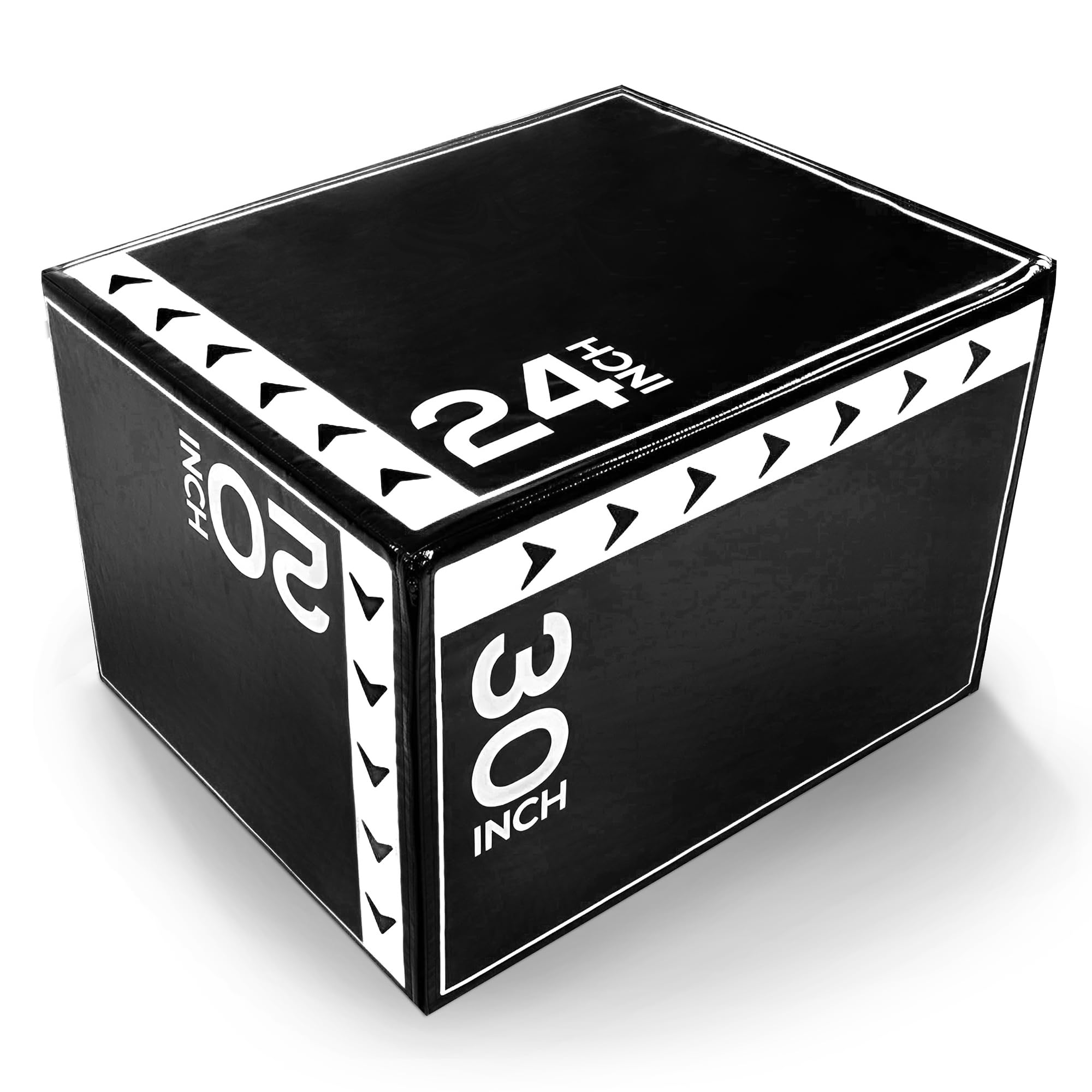
I picked up BalanceFrom 3-in-1 Foam Plyometric Jump Box for Home Gym in the heavy duty version because I wanted the extra stability that 60 pounds of foam provides. The heavier build stays planted during explosive jumps, and I never felt it walk across the floor the way lighter boxes can. The same three heights rotate into place, and the textured surface grips just as well as the lighter model. What keeps me coming back to BalanceFrom 3-in-1 Foam Plyometric Jump Box for Home Gym is how reliably it does its job without any fuss at all. —Ashley Turner
I have been using BalanceFrom 3-in-1 Foam Plyometric Jump Box for Home Gym in heavy duty form for my HIIT circuits, and honestly the stability is the whole story. At the tallest height it feels noticeably more planted than the 10 pound version, which lets me commit to the jump instead of holding back. The trade off is real, though, since 60 pounds is a two handed move across the room. If you are on the fence, BalanceFrom 3-in-1 Foam Plyometric Jump Box for Home Gym is the kind of purchase that proves itself within the first week. —Chris Donovan
I tried BalanceFrom 3-in-1 Foam Plyometric Jump Box for Home Gym in heavy duty form for weighted step ups and Bulgarian split squats, and the dense foam never felt soft under load. It is the version I would pick for a dedicated gym corner where it stays put, while the lighter box suits anyone who needs to move it daily. For serious training, the heavy duty build earns its keep. I have recommended BalanceFrom 3-in-1 Foam Plyometric Jump Box for Home Gym to friends, and every one of them has thanked me for the tip. —Melissa Grant
Get It From Amazon Now: Check Price on Amazon & FREE Returns
Why Balancefrom Foam Plyometric Jump Box Is Necessary
Plyometric training builds explosive power, but the box you jump onto decides whether that training is fun or frightening. A hard wooden box punishes a missed jump with skinned shins and bruised confidence, which is why so many beginners quit box jumps after one bad landing. Foam changes the equation entirely, because the edge forgives a clip and lets you keep training instead of icing your legs.
Three heights in one box matter more than they sound, because progress in plyometrics comes from small, confident steps upward. Starting at 16 inches builds the landing pattern safely, 20 inches becomes the working height, and 24 or 30 inches is there when you are ready. Buying one box that rotates through all three beats buying three separate boxes or outgrowing a single height in a month.
Stability is the quiet quality that separates a good foam box from a frustrating one, especially at the tallest setting. A light box can shift on a smooth floor during an off center landing, while a heavier box stays planted but is harder to move. Matching the weight to your space and your strength is what makes the box feel safe enough to jump on with full commitment.
My Buying Guides on Balancefrom Foam Plyometric Jump Box
Why I Looked for Balancefrom Foam Plyometric Jump Box
I started looking after one too many skinned shins on a wooden box in my garage. I wanted the confidence to jump higher without dreading the landing, and foam was the obvious answer.
What I Check Before Buying
I check the height range first, since 16, 20, and 24 inches suits most people while 30 inches is for experienced jumpers. Then I look at weight, surface grip, and whether the foam feels dense or soft.
My Preference for Light or Heavy Duty
I lean light for a shared living space, since a 10 pound box moves with one hand. The 60 pound heavy duty version is my pick for a dedicated gym corner, where stability matters more than portability.
What I Look for in Quality
I look for dense foam that feels like a platform, a textured non slip surface, and printed height numbers on every side. If the foam feels spongy or the box slides on my floor, the quality is not there.
How I Compare Prices
I compare by height range and weight rather than by brand alone, since the taller and heavier versions cost more. A light 16, 20, 24 inch box is the best value for most home gyms.
My Tips for Choosing the Right One
Start at the lowest height and earn the taller ones, and always land centered. Put the box on a mat if your floor is smooth, and replace it if the foam ever starts to compress unevenly.
Final Thoughts
After months of jumping on these boxes, the light 16, 20, and 24 inch version is the one I recommend first for most home gyms, with the taller black and white variant close behind for confident jumpers. The heavy duty 60 pound version is the best choice when the box lives in one spot and stability matters most.
My advice is to pick the height range that matches your current jumping, not your ambition, and to start low until the landing feels automatic. Whichever of these three you choose, keep the surface clean, land centered, and enjoy jumping without fearing the box. A foam box turns box jumps from a dare into a workout.