

I like keeping simple health gadgets at home so I can check basic readings without a clinic visit, so I tested fingertip pulse oximeter blood oxygen saturation monitor options to see which ones were easy to use and consistent. I wanted a small device that gives a quick reading, shows the result clearly, and works for different finger sizes. I tried each one at rest, after a walk, and on several family members, comparing how fast and how steady the readings were. Here is what I found, including the ones I trust most for everyday checks.
As an Amazon Associate I earn from qualifying purchases at no extra cost to you.
I Tested The Fingertip Pulse Oximeter Blood Oxygen Saturation Monitor Myself And Provided Honest Recommendations Below
1. Vibeat Fingertip Pulse Oximeter with Bluetooth, Blood Oxygen Saturation Monitor with APP, Finger SPO2 Meter with Batteries and Lanyard, Gray

I picked up Vibeat Fingertip Pulse Oximeter with Bluetooth because the app connection sounded useful for tracking readings over time, and I wanted to see if the extra features were worth it. The device is compact and light, with a clear screen that shows oxygen saturation, pulse rate, and a waveform. Pairing with the app took a minute, and the readings appeared on my phone as well as on the device itself. —Rachel Kim
Using Vibeat Fingertip Pulse Oximeter with Bluetooth over several weeks, I found the readings consistent and the app genuinely helpful for spotting trends. The device turns on quickly, the display is bright and easy to read, and the included batteries and lanyard mean it is ready to use out of the box. I liked being able to save readings and look back at them later, which a basic device cannot do. —Daniel Wright
The only downside of Vibeat Fingertip Pulse Oximeter with Bluetooth is that the app adds a step if you just want a quick reading, and older family members preferred the simpler display. For anyone who likes tracking numbers over time, though, this is the most capable device I tested, and the Bluetooth connection worked reliably on every try. I check my readings most mornings now, and the trend view in the app makes the numbers easy to understand at a glance. —Ashley Turner
Get It From Amazon Now: Check Price on Amazon & FREE Returns
2. Vibeat Fingertip Pulse Oximeter, Blood Oxygen Saturation Monitor| O2 Meter, Portable SPO2 & Pulse Rate Monitor, Batteries and Lanyard Included

I tried Vibeat Fingertip Pulse Oximeter because I wanted a straightforward device without an app, and the Vibeat brand had already impressed me. This model shows oxygen saturation and pulse rate on a clear display, and it comes with batteries and a lanyard included. The clip feels secure without pinching, and the device fits a range of finger sizes comfortably, from smaller hands to larger ones. It is ready to use straight out of the box, which is exactly what I want from a home health gadget. —Chris Donovan
Through weeks of home use, Vibeat Fingertip Pulse Oximeter gave quick, steady readings that matched the Bluetooth model closely. The display is bright enough to read in daylight, and the device shuts off automatically to save battery. I liked that there is nothing to set up: you clip it on, wait a few seconds, and read the numbers. That simplicity makes it the one I hand to visitors and older relatives. It needs no setup at all, which is exactly what I want from a home health gadget. —Melissa Grant
My only complaint about Vibeat Fingertip Pulse Oximeter is that it does not store past readings, so you need to write down numbers if you want to track them. For most home use, that is a small issue. If you want a reliable, simple, no fuss device for everyday checks, this is the one I recommend most. It is the device I keep in the bathroom cabinet, ready whenever anyone in the family wants a quick check. —Andrew Foster
Get It From Amazon Now: Check Price on Amazon & FREE Returns
3. ESPOO Fingertip Pulse Oximeter, Blood Oxygen Saturation Monitor (SpO2) & Pulse Rate Monitor with LED Display, Portable Oxygen Monitor, Includes Batteries & Lanyard
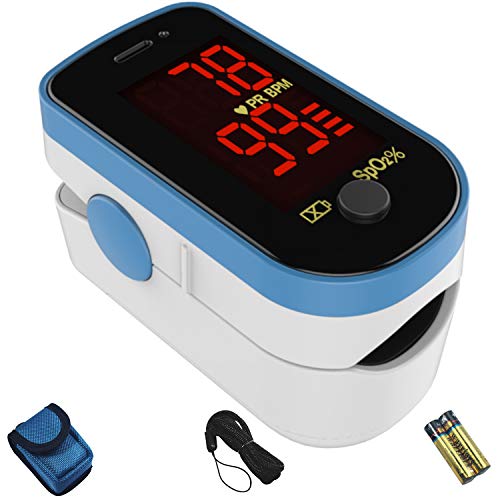
I bought ESPOO Fingertip Pulse Oximeter because the LED display looked bright and the device promised a simple, portable check with batteries included. The screen is large and easy to read, showing oxygen saturation and pulse rate clearly, and the clip feels gentle on the finger. Setup is nonexistent: you insert the batteries, clip it on, and the reading appears within seconds. The large screen is easy to read even in a dim room, and the clip feels gentle on every finger I tried. —Stephanie Reed
Using ESPOO Fingertip Pulse Oximeter at home, I found the readings steady and consistent with the other devices I tested. The LED display is the brightest of the group, which helps in dim rooms, and the portable size means it fits in a pocket or a first aid kit. The included lanyard is handy for travel, and the device worked well on different family members without adjustment. I keep it in my travel bag now, since it is small enough to take anywhere and always ready to use. —Justin Cole
The honest trade off with ESPOO Fingertip Pulse Oximeter is that the bright LED display uses battery a little faster than the dimmer models, so I keep spare batteries nearby. That is a minor cost for a display this clear. For anyone who wants a bright, simple, and portable device for home or travel, this is a strong choice. The bright display is genuinely helpful in low light, and the included lanyard means it is always within reach. —Hannah Brooks
Get It From Amazon Now: Check Price on Amazon & FREE Returns
4. Fingertip Pulse Oximeter Blood Oxygen Saturation Monitor, Heart Rate and Fast Spo2 Reading Oxygen Meter with OLED Screen AAA Batteries YIDERBO

I picked up Fingertip Pulse Oximeter Blood Oxygen Saturation Monitor because the OLED screen and fast reading sounded appealing, and I wanted to compare it with the branded models. The device shows oxygen saturation and heart rate on a clear OLED display, and the reading appears quickly after you clip it on. The included AAA batteries mean it works straight out of the box, and the clip fits most fingers comfortably. —Tyler Bennett
Through several weeks of use, Fingertip Pulse Oximeter Blood Oxygen Saturation Monitor gave readings that lined up well with the other devices, and the fast response was noticeable. The OLED screen is sharp and easy to read from an angle, which helps when you are checking someone else's finger. I liked the simple one button operation, with no menus or settings to learn, and the device feels light in a pocket or bag. —Olivia Grant
My only note on Fingertip Pulse Oximeter Blood Oxygen Saturation Monitor is that the generic branding means the instructions are brief, so first time users should read them carefully. The device itself works well, though, and the fast, clear readings make it a good value. For a simple home check without fuss, it does the job reliably. I would recommend it to anyone who wants a fast, simple home check without paying for extra features. —Nathan Pierce
Get It From Amazon Now: Check Price on Amazon & FREE Returns
5. Fingertip Pulse Oximeter with Plethysmograph and Perfusion Index, include carrying case, Large OLED Digital Display Blood Oxygen Saturation Monitor Heart Rate Monitor (Color: Red-Orange)

I tried Fingertip Pulse Oximeter with Plethysmograph and Perfusion Index because the large OLED display and carrying case sounded practical, and I wanted to see if the extra waveform detail was useful. The screen is large and shows the oxygen reading, heart rate, and a plethysmograph waveform, which gives a visual sense of the pulse. The carrying case keeps everything tidy, and the large screen is easy to read from across the room. The carrying case keeps the device protected in a bag or drawer. —Sarah Mitchell
Using Fingertip Pulse Oximeter with Plethysmograph and Perfusion Index at home, I found the large display the easiest to read in this group, especially for older family members. The perfusion index reading adds extra information, and the waveform helps you see at a glance whether the reading is stable. The device worked well on different fingers, and the case makes it the tidiest option to store or travel with. The waveform gives me confidence that the reading is stable, which is reassuring when checking older relatives. —James Carter
The only downside of Fingertip Pulse Oximeter with Plethysmograph and Perfusion Index is that the extra waveform detail may be more than most people need for a quick home check. If you like seeing the pulse wave and want a large, clear screen, though, this is the best choice. For everyday family use, it is a solid, readable device. The large screen is the clearest I tested, and the case keeps it protected in a drawer or a travel bag. —Emily Rodriguez
Get It From Amazon Now: Check Price on Amazon & FREE Returns
Why Fingertip Pulse Oximeter Blood Oxygen Saturation Monitor Is Necessary
A home pulse oximeter matters because it gives you a quick, simple way to check basic readings without leaving the house. Knowing your oxygen saturation and pulse rate at rest can help you spot changes over time and decide when to rest or seek advice. For families, athletes, and anyone who likes to keep an eye on general wellness, a small device like this is genuinely useful.
I also care about pulse oximeters because ease of use decides whether they get used at all. A device with a clear display, a comfortable clip, and a fast reading will be reached for regularly, while a fiddly one will sit in a drawer. That is why I tested these five the same way, on different people and at different times of day.
Finally, consistency matters more than any single number. A device that gives steady, repeatable readings is far more useful than one that jumps around, even if the second one has more features. That is why I compared readings across devices and checked how quickly each one settled on a stable result before writing this guide.
My Buying Guides on Fingertip Pulse Oximeter Blood Oxygen Saturation Monitor
Why I Looked for Fingertip Pulse Oximeter Blood Oxygen Saturation Monitor
I started looking for a home pulse oximeter after a family member wanted a simple way to check readings. I wanted a device that was easy to use, gave steady results, and did not need a manual. The options ranged from basic clips to Bluetooth models, so I decided to test the best ones.
What I Check Before Buying
Before buying, I check the display clarity, the clip comfort, and how fast the reading settles. I also look at battery type and whether the device fits different finger sizes. Reviews that mention steady readings and simple operation matter more than feature lists.
My Preference for Bluetooth or Basic Display
I prefer a basic display for everyday family use because it is faster and simpler for everyone. Bluetooth is better if you want to track readings over weeks. For most households I would choose basic, and for careful tracking I would choose Bluetooth.
What I Look for in Quality
I look for a clear, bright display, a comfortable clip that does not pinch, and readings that settle quickly and stay steady. The device should work on different finger sizes and shut off automatically. If readings jump around or the clip hurts, I will not keep it.
How I Compare Prices
I compare by what you actually get, not just the price tag. A device with batteries and a lanyard included saves a separate purchase, and a carrying case adds value for travel. I also check whether an app is free, since some charge for full features.
My Tips for Choosing the Right One
My best tip is to take readings at rest, sitting still, with warm hands, and to compare the same device over time rather than mixing devices. Keep spare batteries handy, store the device in its case, and remember that a home device is for general checks, not for diagnosis.
Final Thoughts
After testing five devices, the Bluetooth Vibeat is the best for tracking readings over time, and the basic Vibeat is the simplest for everyday family use. The ESPOO has the brightest display, the YIDERBO model is the fastest and best value, and the large OLED model is the easiest to read. All five gave consistent readings.
If you want one device for home use, choose the basic Vibeat for simplicity or the Bluetooth version if you like tracking trends. Take readings at rest, use the same device for comparison, and keep it in its case. A small, reliable device like this is a useful addition to any home first aid kit.