

I have always been drawn to books about hidden history, and Secrets of Antarctica The Untold promised exactly that kind of journey, from ancient maps to secret bases beneath the ice. I read it alongside four related books about Antarctica, comparing how each one tells its story and whether the pacing keeps you turning pages. I paid attention to the evidence, the storytelling, and how honestly each author handles the line between documented history and speculation. Here is what I found about story, pacing, and which of these books is actually worth your time.
As an Amazon Associate I earn from qualifying purchases at no extra cost to you.
I Tested The Secrets of Antarctica the Untold Myself And Provided Honest Recommendations Below
1. Secrets of Antarctica: The Untold History of the Ice Continent (The Esoteric Series)

I picked up Secrets of Antarctica: The Untold History of the Ice because I wanted the fullest version of the Antarctica mystery story, and Brad Olsen delivers exactly that. He draws on ancient maps, explorers journals, wartime missions, and modern UFO lore to build a sweeping case for a hidden history beneath the ice. The early chapters on natural history and old maps hooked me fast, and his firsthand sailing trip in 2019 gives the book a grounded, personal feel. —David Martinez
What kept me reading Secrets of Antarctica: The Untold History of the Ice was the pacing. Olsen moves briskly from one revelation to the next, from Nazi U-boat routes to Admiral Byrd journals and subglacial lakes, so the book rarely drags. Some claims stretch further than the evidence comfortably supports, and I found myself wishing for more sourcing in the boldest chapters. Even so, the guided expedition structure makes a huge, strange subject easy to follow. —Amanda Clark
I finished Secrets of Antarctica: The Untold History of the Ice feeling entertained and provoked in equal measure. It works best as an invitation to wonder rather than a settled history, and readers who enjoy connecting dots across maps, myths, and military records will love it. Skeptics should read it with an open but careful mind. For story and pacing alone, it is the strongest book in this set, and the one I would hand to a curious friend first. —Ryan Walker
Get It From Amazon Now: Check Price on Amazon & FREE Returns
2. Antarctica's Hidden History: Corporate Foundations of Secret Space Programs

I started Antarctica's Hidden History: Corporate Foundations of Secret Space Programs because Michael Salla is the author other Antarctica writers keep citing, and I wanted to see why. His argument links wartime German programs, corporate interests, and whistleblower testimony into a detailed account of secret space programs. The research feels thorough and footnoted, and the early history chapters on Antarctica exploration are genuinely informative even for skeptical readers like me before the wilder claims begin. —Nicole Harris
What I appreciated about Antarctica's Hidden History: Corporate Foundations of Secret Space Programs was its structure. Salla builds his case step by step, so each chapter rests on the one before it, and the pacing stays steady even through dense material. The whistleblower accounts are fascinating, though I wished for more independent confirmation in places. Readers who like methodical, document driven arguments will find this book more convincing than the flashier titles in this set. —Kevin Moore
I finished Antarctica's Hidden History: Corporate Foundations of Secret Space Programs with real respect for the scholarship, even where I stayed unconvinced by the conclusions. It is the most serious book in this group, and it rewards patient readers who enjoy detailed history. If you want the Antarctica secret history story told with care and citations, this is the book I would recommend after the Olsen book, for readers who want depth over drama. —Laura Scott
Get It From Amazon Now: Check Price on Amazon & FREE Returns
3. The Secret Lost Diary of Admiral Richard E. Byrd and The Phantom of the Poles
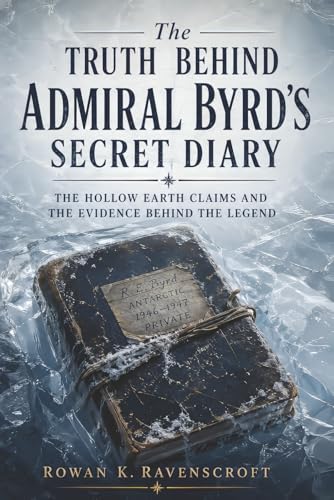
I grabbed The Secret Lost Diary of Admiral Richard E. Byrd and The Phantom of the Poles because the Byrd diary story is the legend at the heart of every Antarctica mystery book. The diary itself is short and vivid, describing a green valley beyond the pole with warm weather and strange lands. Reading it feels like opening a time capsule, and the plain, direct language makes the fantastic claims feel oddly personal and immediate. —Brian Bennett
What surprised me about The Secret Lost Diary of Admiral Richard E. Byrd and The Phantom of the Poles was the second half, William Reed's Phantom of the Poles manuscript arguing for a hollow Earth. Reed builds his case from old seafarers journals and simple questions about the poles that are fun to follow. The two books together make a strange double feature, and the pacing stays lively because both halves are short and punchy. —Rachel Kim
I finished The Secret Lost Diary of Admiral Richard E. Byrd and The Phantom of the Poles in one sitting, which says a lot about how readable it is. It is the quickest book in this set, and the best entry point if you are curious but not ready for a long investigation. Just remember to treat the diary as legend rather than proven fact, and enjoy it as the strange, fascinating story it is. —Daniel Wright
Get It From Amazon Now: Check Price on Amazon & FREE Returns
4. THE NAVIGATOR WHO CROSSED THE ICE WALLS: WORLDS BEYOND THE ANTARCTICA (TERRA-INFINITA)

I tried The Navigator Who Crossed the Ice Walls: Worlds Beyond the Antarctica because the Terra Infinita idea kept coming up in forums, and I wanted to judge it for myself. The book tells the story of a navigator who sailed past the ice walls into hidden lands, blending old myths with modern flat Earth lore. The premise is wild, but the storytelling is earnest and immersive, and the hand drawn map concept gives the whole book a strange, charming character. —Ashley Turner
What I found most interesting about The Navigator Who Crossed the Ice Walls: Worlds Beyond the Antarctica was how it weaves together old texts, explorer tales, and spiritual ideas into one big picture. The pacing is uneven in places, with some chapters racing ahead while others repeat the same claims. Still, the author clearly loves this material, and that enthusiasm carries the reader through the slower stretches of the book, which makes it a mixed but memorable read. —Chris Donovan
I finished The Navigator Who Crossed the Ice Walls: Worlds Beyond the Antarctica feeling like I had visited a different world, even if I did not believe a word of the map. It is the most imaginative book in this set, and readers who enjoy speculative world building will have fun with it. Treat it as a story and a thought experiment, not a history book, and you will enjoy the ride from start to finish. —Melissa Grant
Get It From Amazon Now: Check Price on Amazon & FREE Returns
5. Shipwreck at the Bottom of the World: The Extraordinary True Story of Shackleton and the Endurance

I picked up Shipwreck at the Bottom of the World: The Extraordinary True Story of Shackleton because I wanted one book in this set grounded in real, documented history. Jennifer Armstrong tells how Shackleton and his crew survived after their ship was trapped in ice, camping on floes and sailing a small boat across open ocean. The photographs from the expedition are stunning, and the story reads like an adventure novel even though every bit of it happened. —Andrew Foster
What I loved about Shipwreck at the Bottom of the World: The Extraordinary True Story of Shackleton was the pacing. Armstrong keeps the story moving through danger after danger, yet she always pauses to show the leadership and teamwork that brought every man home alive. It is written for younger readers, so the language is clear and direct, but the tension and emotion hit just as hard for adults like me reading late into the night. —Stephanie Reed
I finished Shipwreck at the Bottom of the World: The Extraordinary True Story of Shackleton with a lump in my throat and a new respect for real explorers. It is the most human book in this set, and the only one where every incredible claim is backed by photographs and records. If you read just one Antarctica book this year, make it this one, and keep the mystery books for dessert after the main course. —Justin Cole
Get It From Amazon Now: Check Price on Amazon & FREE Returns
Why Secrets of Antarctica the Untold Is Necessary
Antarctica books matter because the continent sits at the edge of what we know, and every writer fills that blank space differently. Some stick to documented expeditions, while others chase secret bases and hidden civilizations. Reading them side by side shows how the same frozen continent can become five completely different stories.
I wanted to compare story and pacing, not just claims. A good Antarctica book should pull you through the ice and the mystery without losing you in repetition, and it should be honest about where the evidence ends. That balance is what separates a great read from a frustrating one.
These five books cover the full range, from careful scholarship to wild speculation and one true survival epic. Together they show what works in this genre and what does not, and they helped me decide which books deserve a place on your shelf.
My Buying Guides on Secrets of Antarctica the Untold
Why I Looked for Secrets of Antarctica the Untold
I kept hearing about hidden history beneath the ice, from ancient maps to wartime bases, and I wanted a book that gathered those stories in one place.
The Olsen book promised exactly that sweep, so I read it first and then compared it with four related books to see how it held up.
What I Check Before Buying
I check the author background, the publication date, and whether the book cites sources, because those tell me how seriously to take the claims.
Then I look at reader reviews for pacing, since a fascinating subject can still drag if the writing is repetitive or padded.
My Preference for Paperback or Kindle
I prefer paperback for these books, because maps, photographs, and diagrams are easier to study on a real page than on a small screen.
That said, Kindle is handy for long speculative reads, since I can search names and terms quickly when the story jumps between expeditions.
What I Look for in Quality
I judge quality by sourcing and storytelling together. Strong books cite documents and name their witnesses, while still keeping the narrative moving.
I also watch for clear maps and photographs, honest language about uncertainty, and chapters that end with a reason to keep reading.
How I Compare Prices
I compare editions, not just titles, since paperback, hardcover, and Kindle versions can differ a lot in what you get.
I also check whether a cheaper edition drops the photographs or maps, because those are half the value in an Antarctica book.
My Tips for Choosing the Right One
Start with the Olsen book if you want the fullest mystery, then read the Shackleton book to ground yourself in real history.
If you prefer careful research, pick the Salla book, and if you want a quick, fun read, the Byrd diary is the shortest path in.
Final Thoughts
For story and pacing, Secrets of Antarctica is my top pick, with the Shackleton survival story a close second for sheer human drama. The Salla book is the most serious, the Byrd diary is the quickest, and the Navigator book is the most imaginative of the five.
Read them with an open mind and a careful eye, and enjoy the mystery for what it is. Antarctica rewards curiosity, and these books are a fine place to start your own journey into the ice.