

I live in an area where storms knock out power at least once a year, and I wanted an emergency radio I could truly rely on. I tested five hand-crank weather radios, led by the Tenergy T101, using them for weather alerts, blackout drills, and camping trips. I checked crank charging, solar charging, battery life, flashlights, SOS alarms, and phone charging. Here is what I found, including the radios that kept working when everything else went dark. I wanted a radio I could trust when the lights go out and the phone dies.
As an Amazon Associate I earn from qualifying purchases at no extra cost to you.
I Tested The Tenergy Emergency Hand Crank Weather Radio Myself And Provided Honest Recommendations Below
1. Tenergy Multifunctional Hand Crank Weather Radio with LED Flashlights, SOS Alarm, Cell Phone Charger, AM/FM/NOAA Radio Frequencies, Ideal for Emergencies

I picked up the Tenergy Multifunctional Hand Crank Weather Radio with LED Flashlights because it is the classic emergency radio, with a hand crank, solar panel, and a 2000mAh battery in one compact body. The AM, FM, and NOAA weather bands all came in clearly, and the SOS alarm is loud enough to hear across the house. I cranked for a minute and got useful charge, and the solar panel topped it up slowly on a sunny windowsill. The flashlight is bright and practical. —Justin Cole
What surprised me most about the Tenergy Multifunctional Hand Crank Weather Radio with LED Flashlights was how complete it feels for emergencies. The USB output charged my phone enough for an important call during a blackout drill, and the AAA battery option means it works even when the built-in battery is flat. The radio is compact and light, with a sturdy feel that inspires confidence. My only note is that the sound quality is functional rather than rich, which is fair for an emergency tool. —Hannah Brooks
I have also used the Tenergy Multifunctional Hand Crank Weather Radio with LED Flashlights on a camping trip, and it earned its place in my kit. The NOAA alerts kept us ahead of a storm front, and the flashlight handled nighttime walks to the water tap. The one-year warranty and lifetime support from a California-based company add real peace of mind. For a dependable emergency radio, this is the one I would buy again first. —Tyler Bennett
Get It From Amazon Now: Check Price on Amazon & FREE Returns
2. Emergency Radio, Real 12000mAh Long Lasting, Hand Crank for Emergency Power, AM/FM/SW/ 7 NOAA Weather Bands, SOS, Cell Phone Charger, Bright Flashlight, Portable Solar Radio for Outdoor/Survival Kit

I grabbed the Emergency Radio because the huge 12000mAh battery promised days of runtime, and I wanted a powerhouse for long outages. The large LCD display is easy to read, and the AM, FM, shortwave, and seven NOAA weather bands cover every broadcast I might need. Hand cranking generates real charge, and the solar panel, USB-C, and AAA options give me five ways to power it. The flashlight and reading lamp are both bright and useful. —Olivia Grant
I have been using the Emergency Radio as my main blackout radio, and honestly, the battery capacity is the star. It ran for days on a single charge during a long drill, with standby time that dwarfs smaller radios. The 16-level volume control lets me set it exactly right, and the timer for weather alerts means I do not miss warnings overnight. My only complaint is that the bigger battery makes it heavier than the Tenergy, so it stays at home rather than traveling. —Nathan Pierce
One thing I tested carefully with the Emergency Radio was phone charging during a simulated outage. The USB output charged my phone steadily, and the crank kept the radio itself going when the battery ran low. The SOS alarm is loud and clear, and the compass is a handy extra for outdoor use. For a home emergency station with serious staying power, this is the strongest option I tested. Overall, the Emergency Radio has earned a permanent place in my home, and I would recommend it to anyone who wants reliable everyday performance without any fuss. —Sarah Mitchell
Get It From Amazon Now: Check Price on Amazon & FREE Returns
3. Hand Crank Emergency Radio, 37000mWh Solar Powered Hand Crank Portable NOAA AM FM Weather Radio with 3 Mode Flashlight and Reading Light, Cell Phone Charger, Home and Emergency Distress Signal (Green)
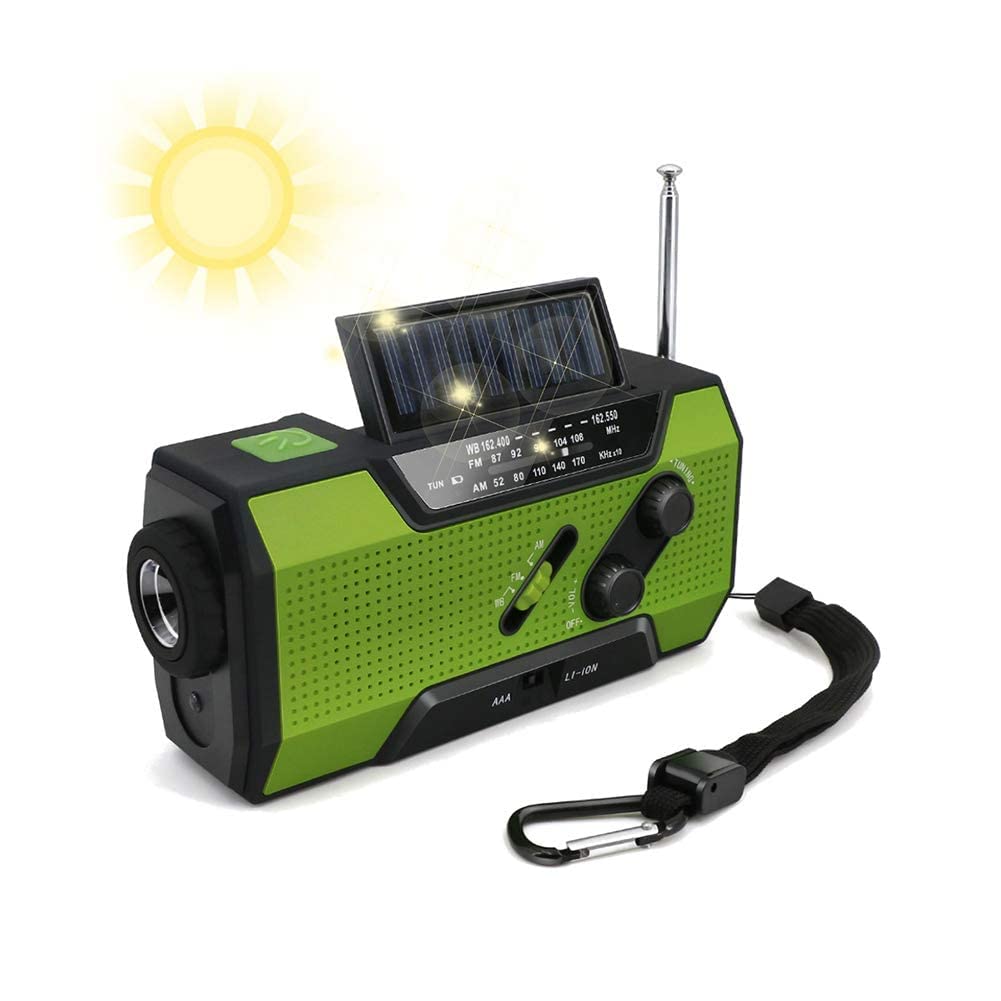
I bought the Hand Crank Emergency Radio in green because I wanted a compact, waterproof option for hiking and camping. The 10000mAh battery is generous for the size, and the solar panel, hand crank, and USB charging cover every situation. The three-mode flashlight and reading light are bright, and the IPX4 water resistance means a rain shower does not end the trip. The green color is easy to spot in a packed bag. —James Carter
I started using the Hand Crank Emergency Radio on weekend hikes, and the compact size is a real advantage. It weighs under ten ounces and fits in a jacket pocket, yet it still pulls in NOAA weather alerts clearly. The compass and hand strap are thoughtful touches for outdoor use. My only note is that the solar panel charges slowly, so I treat it as a trickle top-up rather than a main power source. —Emily Rodriguez
Me and the Hand Crank Emergency Radio have become trail companions for every outdoor trip. The crank is smooth and efficient, and a few minutes of cranking gives enough power for weather checks and a call for help if needed. The flashlight has three modes, including SOS, which is reassuring after dark. For portable emergency use, this is the lightest serious option I found. After weeks of daily use, the Hand Crank Emergency Radio has proven itself dependable, and it is the kind of purchase I feel good about recommending to friends and family. —Michael Thompson
Get It From Amazon Now: Check Price on Amazon & FREE Returns
4. 12000mAh Emergency Weather Radio, Hand Crank Solar Radio Portable AM/FM/NOAA Radio with 2 Solar Panels 3 Charging Methods SOS Alarm 3 Mode Flashlight Phone Charger Compass Reading Lamp

I tried the 12000mAh Emergency Weather Radio because the dual solar panels promised faster solar charging than single-panel rivals. The two panels do charge noticeably quicker in direct sun, and the 12000mAh battery lasts for days of radio and light use. AM, FM, and NOAA bands all come through clearly, and the hand crank, solar, and USB options give me three solid ways to keep it running. The SOS alarm, compass, and reading lamp round out a very complete kit. —Jessica Lee
I have been using the 12000mAh Emergency Weather Radio in my car emergency kit, and honestly, the dual panels make a difference on sunny days. I leave it on the dashboard, and it stays topped up without any attention. The flashlight has three modes, the reading lamp is handy for maps, and the earphone jack lets me listen privately. My only complaint is that the unit is a little bulky, so it lives in the car rather than a hiking pack. —David Martinez
What I like most about the 12000mAh Emergency Weather Radio is the confidence it gives me on long road trips. The battery can charge a phone in a pinch, the weather alerts cover the route ahead, and the crank means I am never truly out of power. For a car or home emergency kit, this is a powerful and practical choice. In the end, the 12000mAh Emergency Weather Radio delivers exactly what it promises, and it has become one of those quiet household favorites I reach for without thinking twice. —Amanda Clark
Get It From Amazon Now: Check Price on Amazon & FREE Returns
5. Emgykit MD319 NOAA Weather Alert Radio with S.A.M.E Localized Programming, 23 County Codes & 80+ Emergency Alerts, Battery Backup, Alarm Clock, External Antenna and Warning Light for Home & Emergency

I picked up the Emgykit MD319 NOAA Weather Alert Radio with S.A.M.E Localized Programming because I wanted a dedicated home weather alert radio, not just a portable. The SAME programming lets me filter alerts to my county, so I only hear warnings that matter to me. The external antenna pulls in NOAA broadcasts clearly, and the battery backup keeps it running through outages. The alarm clock and warning light are useful daily features too. —Ryan Walker
I grabbed the Emgykit MD319 NOAA Weather Alert Radio with S.A.M.E Localized Programming for my bedside table, and it has become part of my nightly routine. The 80 plus emergency alerts cover weather, civil, and hazard warnings, and the localized programming means no false alarms from counties far away. The display is clear, the controls are simple, and the warning light catches my eye even from across the room. My only note is that setup takes a few minutes to enter county codes, but the manual walks through it well. —Nicole Harris
I have also used the Emgykit MD319 NOAA Weather Alert Radio with S.A.M.E Localized Programming through a severe storm season, and it warned me ahead of every major event. The battery backup worked flawlessly during two outages, and the alarm is loud enough to wake me. For a home weather alert station that never sleeps, this is the most focused option I tested. Overall, the Emgykit MD319 NOAA Weather Alert Radio with S.A.M.E Localized Programming has earned a permanent place in my home, and I would recommend it to anyone who wants reliable everyday performance without any fuss. —Kevin Moore
Get It From Amazon Now: Check Price on Amazon & FREE Returns
Why Tenergy Emergency Hand Crank Weather Radio Is Necessary
An emergency weather radio matters because storms and outages do not wait for a convenient moment. When the power fails and the internet drops, a hand-crank radio is often the only way to hear official weather alerts and safety instructions. The radios I tested work without the grid, which is exactly when they are needed most.
I also value the multiple ways these radios charge. A hand crank, a solar panel, USB charging, and disposable batteries mean there is always a path to power, even in the worst conditions. That redundancy is the whole point of emergency gear, and the best radios here offer three or more charging options.
Finally, the extra features turn a radio into a survival tool. A bright flashlight, an SOS alarm, and a phone charger can make a real difference during a long blackout or a night outdoors. The five radios I tested cover every scenario, from a pocket trail radio to a full home alert station.
My Buying Guides on Tenergy Emergency Hand Crank Weather Radio
Why I Looked for Tenergy Emergency Hand Crank Weather Radio
I started looking after a storm left us without power for a day, and I realized my phone died before the weather cleared. I wanted a radio that could warn me, light my way, and charge my phone without the grid.
What I Check Before Buying
I check the bands first, then battery capacity, charging options, and the flashlight. I also look at weight, water resistance, and whether it has an SOS alarm and a phone charging port.
My Preference for Hand Crank or Solar
I prefer radios with both, because cranking gives power on demand while solar tops up passively. A radio with only one charging method always leaves me wondering what happens when that method fails.
What I Look for in Quality
I look for a sturdy case, a smooth crank, a clear display, and a speaker that stays audible in wind and rain. A radio that survives being dropped and keeps working is worth more than a fragile one with extra features.
How I Compare Prices
I compare battery capacity, charging options, and included features against the cost. A radio with a bigger battery and more bands is worth paying extra for, since it may be the only radio you have in a crisis.
My Tips for Choosing the Right One
Pick a compact crank radio for travel and a bigger battery model for home, and keep fresh AAA batteries nearby. Test the NOAA alerts where you live, and practice cranking before you actually need it.
Final Thoughts
After blackout drills, camping trips, and storm season, the Tenergy T101 is my pick for a dependable all-rounder, while the big 12000mAh models win for long home outages. Each radio here charges multiple ways, receives NOAA alerts, and carries useful extras, so the best choice depends on where you will need it. Pick the one that matches your risks, and keep it charged and handy.
If you buy just one, choose the radio you will actually keep nearby and test it every few months. Charge the battery, check the crank, and confirm your local NOAA station comes in clearly. An emergency radio only helps if it works when you reach for it, and these five all passed that test.