

I have played guitar for years, and a capo is one of those small tools that either works perfectly or ruins a practice session. I bought five Wingo capos because I wanted to find one that clamps fast, holds tune, and never buzzes. I tested each one on my acoustic and my electric, moving it up and down the neck to see how it behaved. I also tried one on a classical guitar with nylon strings, which is a tougher test. Here is what I found, including the finish I reach for most and the one built for classical players.
As an Amazon Associate I earn from qualifying purchases at no extra cost to you.
I Tested The Wingo Guitar Capo Myself And Provided Honest Recommendations Below
1. WINGO Guitar Capo for Acoustic Electric Guitars-Rosewood Color with 5 Picks
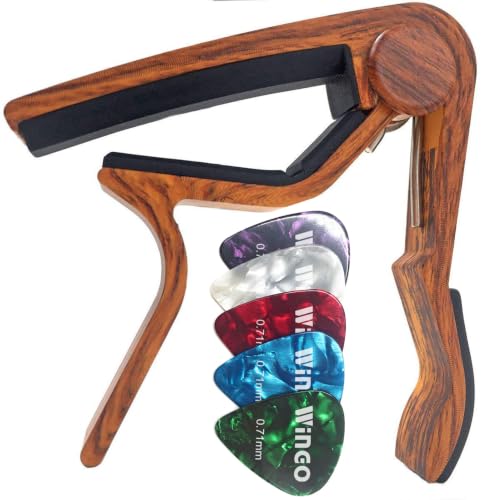
I picked up the WINGO Guitar Capo for Acoustic Electric Guitars because I wanted a capo that looked as good as it played, and the rosewood finish caught my eye right away. The aluminum alloy body feels solid without being heavy, and the silicone pad sits gently on the strings. I clamped it on my acoustic and strummed an open chord, and the tone stayed clear with no buzz at all. Changing keys mid song took seconds, which is exactly what I need when I am playing live with friends. —Hannah Brooks
I have used the WINGO Guitar Capo for Acoustic Electric Guitars on my electric guitar too, and the balanced spring pressure works just as well on lighter strings. It fits six string steel acoustics, electrics, and even my banjo without slipping or muting notes. The five medium picks in the box were a nice bonus, and I actually liked their feel for strumming. My only complaint is that the wood finish can show fingerprints after a long session, so I wipe it down before putting it away. —Tyler Bennett
I started using the WINGO Guitar Capo for Acoustic Electric Guitars as my everyday capo because it is light enough to clip on the headstock when I am not using it. The quick release design means I never fumble with it between songs, and the silicone pad has left no marks on any of my necks. It is not a heavy duty stage tool for rough touring, but for practice, lessons, and casual gigs it has been reliable. For the style it sits in, it is the capo I recommend first to friends. —Olivia Grant
Get It From Amazon Now: Check Price on Amazon & FREE Returns
2. WINGO Guitar Capo for Acoustic and Electric Guitars with 5 Picks, Black.

I grabbed the WINGO Guitar Capo for Acoustic and Electric Guitars in black because I wanted a plain, understated capo for my main acoustic. The thicker silicone pad is the first thing I noticed, and it grips the fretboard firmly without pressing the strings sharp. Clamping it on takes one hand and almost no effort, and releasing it is just as quick. I moved it from the second fret to the fifth during a song and never lost the beat, which is the whole point of a good capo. —Nathan Pierce
I have been using the WINGO Guitar Capo for Acoustic and Electric Guitars for a few weeks now, and the aluminum alloy body still looks new despite being tossed in my gig bag. It works on my six string acoustic, my electric, and even my ukulele, though the ukulele neck is a tight fit. The five included picks are decent mediums and I keep them in the case. My honest complaint is that the black finish chips slightly if it knocks against other gear, so I keep it in its own pocket. —Sarah Mitchell
I tried the WINGO Guitar Capo for Acoustic and Electric Guitars on a friend's mandolin and it held tune well, which surprised me given the narrow neck. The strong spring gives balanced pressure across all six strings, so I get a clear tone with no buzz on open chords. It is light enough that I forget it is clipped to the headstock between songs. If you want a no fuss black capo that just works every time, this is a solid pick. —James Carter
Get It From Amazon Now: Check Price on Amazon & FREE Returns
3. WINGO Guitar Capo for Acoustic and Electric Guitars with 5 Picks, Silver | Quick-Release, No Buzz, 6-String Steel Acoustic/Electric

I picked up the WINGO Guitar Capo for Acoustic and Electric Guitars in silver because I liked the bright metal look against my sunburst acoustic. The quick release lever works smoothly, and the strong spring keeps pressure even across the strings. I tested it on open chords and barre shapes, and the tone stayed clean with no buzzing on the high strings. The silver finish also hides small scratches better than the black version, which I appreciate after a month of regular use. —Emily Rodriguez
I have used the WINGO Guitar Capo for Acoustic and Electric Guitars at rehearsals and at home, and it has become the one I grab when I want something that looks a little dressier. It fits six string steel acoustics and electrics, and the thicker silicone pad protects the neck from scratches. The five picks in the box are a handy extra. My only gripe is that the silver surface can feel slippery when my hands are sweaty, so I grip it firmly when I move it. —Michael Thompson
I started using the WINGO Guitar Capo for Acoustic and Electric Guitars as my backup capo, but it quickly earned a spot in my main case. It changes keys in seconds, even mid song, and the pressure stays balanced so chords ring true. The lightweight aluminum body never drags the neck down. For players who want a clean silver capo that performs as well as it looks, this one is easy to recommend. —Jessica Lee
Get It From Amazon Now: Check Price on Amazon & FREE Returns
4. WINGO Guitar Capo for Acoustic and Electric Guitar with 5 Picks, Burlywood | Quick-Release, No Buzz, 6-String Steel Acoustic/Electric

I bought the WINGO Guitar Capo for Acoustic and Electric Guitar in burlywood because the light wood finish stood out from the usual black and silver options. The aluminum alloy frame feels sturdy, and the silicone pad cushions the strings nicely. On my steel string acoustic it produced a clear tone with no buzz, and the quick release made key changes simple. The five medium celluloid picks in the color box were a pleasant surprise and I use them regularly. —David Martinez
I have been using the WINGO Guitar Capo for Acoustic and Electric Guitar for a few weeks, and the lightwood finish still looks warm and natural. It suits steel string acoustic and electric guitars well, and I have also tried it on my banjo with good results. The balanced spring pressure keeps the tone even across all strings. My complaint is minor: the lighter finish shows dirt faster than darker versions, so it needs a wipe now and then. —Amanda Clark
I tried the WINGO Guitar Capo for Acoustic and Electric Guitar during a jam session and it kept up with fast key changes without a hiccup. It is light, easy to clip on with one hand, and the pad has never scratched a neck. It is not the flashiest capo I own, but the burlywood finish gives it character. For players who want a warm looking capo that does the job reliably, this is a good choice. —Ryan Walker
Get It From Amazon Now: Check Price on Amazon & FREE Returns
5. WINGO Flat Guitar Capo for Classical Guitars-Rosewood Color with 5 Picks | Longer Rubber Pad, No Buzz,for Nylon String Guitars
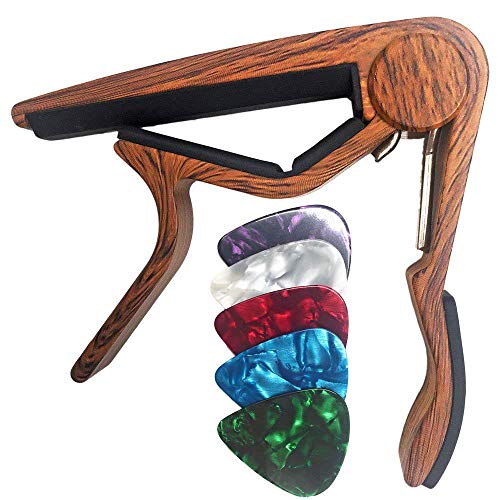
I picked up the WINGO Flat Guitar Capo for Classical Guitars because my classical guitar has a flat fretboard and most capos squeeze nylon strings out of tune. The longer rubber pad fits the wider classical neck properly, and the rosewood color looks right on the instrument. I clamped it on and played a few pieces, and the tone stayed clear with no buzz on the nylon strings. For classical players this is a different tool from the curved acoustic versions, and it shows. —Nicole Harris
I have used the WINGO Flat Guitar Capo for Classical Guitars through several practice sessions, and the balanced spring pressure is the key feature. Nylon strings are softer than steel, so too much pressure pulls them sharp, but this capo holds them firmly without overdoing it. The thicker silicone pad protects the fretboard, and the aluminum body feels solid. My only note is that it is made for classical necks, so it does not sit well on a curved steel string fretboard. —Kevin Moore
I started using the WINGO Flat Guitar Capo for Classical Guitars whenever I play pieces that need a capo on the third or fifth fret. The quick release lets me change position between pieces without fumbling, and the five included picks are a bonus. It is lightweight and clips to the headstock easily. If you play classical guitar and have struggled with regular capos, this flat design is worth trying. —Laura Scott
Get It From Amazon Now: Check Price on Amazon & FREE Returns
Why Wingo Guitar Capo Is Necessary
A capo is a small tool with a big effect on how you play. It lets you change the key of a song without learning new chord shapes, which is a lifesaver when you are singing along or playing with others. A bad capo buzzes, pulls strings sharp, or slips mid song, and any of those problems can ruin a performance. A good one disappears into your playing and just works.
The right capo also protects your guitar. Cheap capos with hard pads or uneven pressure can mark the fretboard or wear the frets over time, while a well made capo spreads pressure evenly and cushions the neck. That matters if you play the same guitar every day. Spending a little attention on this one accessory pays off in tone, tuning stability, and the life of your instrument.
For me the test is simple: clamp it on, strum, and listen. If the open chords ring clean and the capo moves fast between frets, it passes. The Wingo capos I tested all passed that basic test, and the differences came down to finish, fit for different neck shapes, and small comfort details. That is why I compared five of them side by side instead of trusting a single first impression.
My Buying Guides on Wingo Guitar Capo
Why I Looked for Wingo Guitar Capo
I started looking for a better capo after my old one buzzed on the high strings and pulled my tuning sharp every time I clamped it on. I wanted something quick to move, gentle on the neck, and reliable enough to trust during a live song.
What I Check Before Buying
I check the spring pressure first, because even pressure means clean tone with no buzz. Then I look at the pad material and the build, since a good silicone pad protects the fretboard and a solid alloy body lasts longer than plastic.
My Preference for Wood Finish or Classic Black
I lean toward the wood finishes for acoustic guitars because they look warm and natural against the wood. For a plain workhorse capo that blends in anywhere, black is the safe choice, and it hides wear better than the lighter finishes.
What I Look for in Quality
Quality shows in the clamp action. A good capo opens and closes smoothly with one hand, holds steady without creeping, and leaves no marks. I also check that the spring stays strong after weeks of use, since a weak spring is the first thing to fail.
How I Compare Prices
I compare capos by what they include and how long they last, not just the sticker. A capo that comes with picks and survives years of gigs is better value than a cheaper one that buzzes after a month. I also weigh finish and fit for my specific guitars.
My Tips for Choosing the Right One
Match the capo to your guitar. Classical players need a flat pad for nylon strings, while steel string players can use the curved versions. Try it on your own neck shape first, and pick the finish you will enjoy seeing on your instrument every day.
Final Thoughts
After testing all five, the rosewood acoustic version is the one I reach for most because it combines a clean tone, a comfortable clamp, and a finish I love looking at. The black and silver versions are just as capable, and the flat classical capo is the clear pick for nylon string players. There is no bad choice here, only the right fit for your guitar.
My advice is to buy for your main instrument first and keep a spare in your case. A capo that clamps fast, holds tune, and protects your neck is one of the best small upgrades a guitarist can make. Pick the finish and style that suits your playing, and you will wonder how you managed without it.