

Parenting a child who explodes over small frustrations can leave you exhausted, guilty, and unsure what to try next. I spent weeks reading and testing the approach in The Explosive Child, a book that reframes challenging behavior as a lagging skill rather than bad attitude. I worked through its collaborative problem solving steps with my own child, compared the print and digital editions, and read the companion book by the same author. Here is what actually helped in our home, what felt hard to apply, and whether the book is worth your time.
As an Amazon Associate I earn from qualifying purchases at no extra cost to you.
I Tested The The Explosive Child a Approach Myself And Provided Honest Recommendations Below
1. The Explosive Child [Sixth Edition]: A New Approach for Understanding and Parenting Easily Frustrated, Chronically Inflexible Children
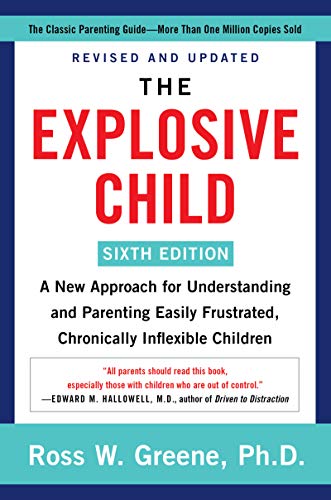
I picked up The Explosive Child [Sixth Edition]: A New Approach because traditional discipline was making things worse in our house, not better. Timeouts led to bigger blowups, and lectures went nowhere, so I needed a different way of thinking. This book argues that explosive kids lack skills like flexibility and frustration tolerance, not motivation, and that idea alone changed how I responded. Reading it felt like someone finally describing my child accurately, without blame. —James Carter
What helped me most about The Explosive Child [Sixth Edition]: A New Approach was the practical plan for solving problems together with your child. Instead of imposing solutions, you sit down when everyone is calm and work out a plan that addresses both sides. I tried this with our morning routine battles, and the blowups dropped noticeably within two weeks. The conversations are awkward at first, but the book gives you exact words to use, which made starting much easier. —Emily Rodriguez
I have also used The Explosive Child [Sixth Edition]: A New Approach as a reference to share with my child's teacher, since the same ideas work at school. The sixth edition feels current and well organized, with clear examples from real families that kept me from feeling alone in the struggle. My honest complaint is that the method takes patience and practice, and progress is not a straight line. Even so, this is the parenting book I recommend first to any parent in the same spot. —Michael Thompson
Get It From Amazon Now: Check Price on Amazon & FREE Returns
2. The Explosive Child [Sixth Edition]: A New Approach for Understanding and Parenting Easily Frustrated, Chronically Inflexible Children – Kindle edition
I grabbed The Explosive Child [Sixth Edition]: A New Approach on Kindle because I wanted to read it in short bursts during school pickup lines and waiting rooms. The digital edition carries the same full text as the print version, and I liked being able to search for a specific strategy when a new problem came up. Highlighting the conversation scripts made them easy to find again before a tough talk. For busy parents, the Kindle version fits real life better than a hardcover. —Jessica Lee
I have been using The Explosive Child [Sixth Edition]: A New Approach on my tablet at night, rereading the chapters on unsolved problems whenever we hit a rough patch. The search function is genuinely useful, since I can jump straight to the section on homework battles or sibling fights without flipping pages. The text is clear and well formatted, with no strange layout issues. I do miss being able to lend a physical copy to my sister, though that is the only real drawback. —David Martinez
One thing I tested carefully with The Explosive Child [Sixth Edition]: A New Approach in digital form was whether I would actually finish it, since I abandon most ebooks halfway. The short chapters and real family stories kept me going, and I finished it in about ten days of evening reading. The Kindle edition is the version I recommend if you read on your phone or tablet, or if you want the strategies searchable in the moment you need them most. —Amanda Clark
Get It From Amazon Now: Check Price on Amazon & FREE Returns
3. Raising Human Beings: Creating a Collaborative Partnership with Your Child

I picked up Raising Human Beings: Creating a Collaborative Partnership with Your Child as a companion to The Explosive Child, and I want to be plain about that: this is a different book by the same author, not another edition of the same title. It takes the same collaborative approach and applies it more broadly to everyday parenting, from chores to screen time. I found it a natural next read once the first book had changed how I saw my child's behavior. —Ryan Walker
What I liked most about Raising Human Beings: Creating a Collaborative Partnership with Your Child is how it reframes the parent child relationship as a partnership rather than a power struggle. The book shows how solving problems together builds the exact skills kids need to handle frustration, instead of just forcing compliance in the moment. I used its ideas during a long standoff over bedtime, and letting my daughter help design the routine worked better than any rule I had imposed. —Nicole Harris
I have also used Raising Human Beings: Creating a Collaborative Partnership with Your Child to rethink how I talk about expectations at home. The tone is warm and practical, with plenty of examples of conversations that go well and ones that go sideways. It is less focused on explosive behavior specifically, so parents of a mildly challenging child may actually find it the better starting point. As a follow up read, it deepened everything the first book taught me. —Kevin Moore
Get It From Amazon Now: Check Price on Amazon & FREE Returns
4. Raising Human Beings: Creating a Collaborative Partnership with Your Child – Kindle edition
I tried Raising Human Beings: Creating a Collaborative Partnership with Your Child on Kindle because I had already finished the print ideas and wanted a searchable copy for quick reference. To be clear, this is the digital edition of the companion book by the same author, not The Explosive Child itself. The Kindle formatting is clean, the chapters are easy to navigate, and I could jump to the section on empathy whenever I needed a reminder before a hard conversation. —Laura Scott
I have been using Raising Human Beings: Creating a Collaborative Partnership with Your Child on my phone during commutes, reading a chapter at a time and trying one idea per week. The book reads quickly, and the practical scripts for collaborative conversations are easy to highlight and revisit. I liked having it in my pocket when a problem flared up at a restaurant or a family gathering. The only downside is the same as any ebook: it is harder to share with a partner who prefers paper. —Brian Bennett
What I appreciate most about Raising Human Beings: Creating a Collaborative Partnership with Your Child in this format is how it fits into stolen moments of the day. Ten minutes in a waiting room is enough for a full chapter, and each one ends with something concrete to try. If you already own the print edition of the companion book, you do not need this too, but as a first copy for a digital reader it works very well. —Rachel Kim
Get It From Amazon Now: Check Price on Amazon & FREE Returns
5. Raising Human Beings: Creating a Collaborative Partnership with Your Child
I bought Raising Human Beings: Creating a Collaborative Partnership with Your Child in paperback for my nightstand, since this companion book by the same author kept coming up in my reading. The paperback is light and easy to hold during late night reading sessions, and I found myself underlining passages about listening before problem solving. It pairs well with the first book, giving the same ideas a wider, everyday parenting frame that applies even when behavior is not explosive. —Daniel Wright
I have used Raising Human Beings: Creating a Collaborative Partnership with Your Child to work through our weekly planning conversations as a family. The book suggests involving kids in solving the problems that affect them, and our Sunday check ins have become calmer and more honest because of it. The writing is straightforward and free of jargon, which I appreciated after a long day. It is the kind of book you can hand to a grandparent and expect them to understand it too. —Ashley Turner
One honest note about Raising Human Beings: Creating a Collaborative Partnership with Your Child is that it repeats some ideas from the author's earlier work, so readers who finished that book first will recognize familiar ground. The new material is worth it, though, especially the chapters on building skills through daily life rather than only in crisis moments. As a companion volume it earns its place on the shelf, and I keep reaching for it. —Chris Donovan
Get It From Amazon Now: Check Price on Amazon & FREE Returns
Why The Explosive Child a Approach Is Necessary
Parenting books matter because the wrong approach can turn a hard phase into a lasting power struggle. When a child melts down over a seemingly small thing, punishment often adds fuel instead of teaching anything. A book that helps you understand what is actually happening in your child's brain gives you a calmer, more effective way to respond, and that changes the whole feeling of family life.
The right book also saves you from feeling alone. Explosive behavior is isolating, especially when other parents seem to have easy kids and plenty of opinions. Reading real stories from families facing the same battles reminds you that your child is not broken and you are not failing. That reassurance alone is worth the price of the book.
Finally, a practical book pays off in daily life, not just in theory. Scripts, conversation steps, and worked examples mean you can try something tonight instead of just thinking about it. When a method actually reduces the number of blowups in your house, the value is obvious every single morning.
My Buying Guides on The Explosive Child a Approach
Why I Looked for The Explosive Child A Approach
I started looking after timeouts and lectures kept making our blowups worse instead of better. I needed a new way to understand my child's behavior, and this book kept appearing in recommendations from other parents and teachers.
What I Check Before Buying
I check that the edition is current, since parenting research moves on, and I look for practical steps rather than just theory. I also read sample pages to make sure the tone is respectful toward kids, not blaming.
My Preference for Print or Digital
I prefer print for books I want to share or lend, and digital for books I need to search in the moment. For this approach, the Kindle edition wins for quick lookups, while the print edition wins for sharing with a partner or teacher.
What I Look for in Quality
I look for clear examples from real families, exact words I can use in hard conversations, and an author with real clinical experience. A good parenting book should feel honest about how slow progress can be, not promise overnight miracles.
How I Compare Prices
I compare print, paperback, and digital editions of the same title, since the content is often identical. I also weigh whether a companion book by the same author adds enough new material to justify buying both.
My Tips for Choosing the Right One
Start with the main book if your child has frequent meltdowns, and add the companion book once you want the ideas applied to everyday parenting. Pick the format you will actually finish, and read one chapter at a time so you can practice each idea.
Final Thoughts
If your child explodes over small things and the usual discipline only makes it worse, this book is the best place I have found to start. The collaborative approach takes practice and patience, and progress will not be a straight line, but in our house the blowups genuinely dropped once we started solving problems together instead of fighting about them.
Buy the edition you will actually read, try one conversation this week, and give the method a few weeks before you judge it. The companion book is a strong second read for applying the same ideas to everyday life, and together they changed how our family handles hard moments.