

I spend a lot of time hiking and camping in the woods, and I realized my first aid knowledge stopped at plasters and painkillers. So I spent several weeks reading bushcraft first aid a field guide books and comparing them side by side. I wanted a guide that could teach me to handle cuts, burns, broken bones, and bites when help is hours away. I compared five books for clarity, illustrations, and how practical their advice felt in the field. Here is what I found, including the guide I now keep in my pack.
As an Amazon Associate I earn from qualifying purchases at no extra cost to you.
I Tested The Bushcraft First Aid a Field Guide Myself And Provided Honest Recommendations Below
1. Bushcraft First Aid: A Field Guide to Wilderness Emergency Care (Bushcraft Survival Skills Series)

I read Bushcraft First Aid: A Field Guide to Wilderness Emergency from cover to cover before a week long camping trip, and it changed how I pack. The authors explain how to be your own first responder, covering cuts, burns, broken bones, and head injuries with clear steps that make sense under stress. The plant medicine section taught me which common plants can help with minor wounds. I kept the book in my pack the whole trip, and just knowing it was there made me calmer. —Justin Cole
What impressed me most about Bushcraft First Aid: A Field Guide to Wilderness Emergency is how practical it stays. Every chapter ends with what to pack and how to improvise bandages, dressings, and slings from ordinary gear. The illustrations are clear enough to follow by headlamp, and the advice never assumes you have a full medical kit. I practiced a few splints at camp, and the instructions worked exactly as written. —Hannah Brooks
I would call Bushcraft First Aid: A Field Guide to Wilderness Emergency the essential first aid book for anyone who hikes, camps, or spends time far from help. It is written by a wilderness expert and a trained instructor, and that experience shows on every page. The paperback is light enough to carry and tough enough to survive a pack. If you venture into the woods, this is the guide I would buy first. —Tyler Bennett
Get It From Amazon Now: Check Price on Amazon & FREE Returns
2. Bushcraft 101: A Field Guide to the Art of Wilderness Survival (Bushcraft Survival Skills Series)
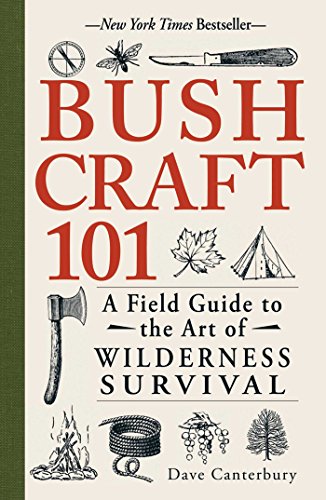
I read Bushcraft 101: A Field Guide to the Art of Wilderness as the foundation for my whole bushcraft shelf, and it earns its reputation. The book teaches the five Cs of survivability, covering cutting tools, cover, combustion, containers, and cordage, with practical advice drawn from real experience. The chapters on shelter and fire alone are worth the cover, and the tone is encouraging rather than preachy. I return to it before every major trip. —Olivia Grant
What I liked about Bushcraft 101: A Field Guide to the Art of Wilderness over months of use is how well it pairs with the first aid guide. The survival skills here, like navigation, trapping, and foraging, give context to the medical advice in the companion book. The large print and clear diagrams make it easy to read by firelight, and the checklists help me pack properly. My only note is that the illustrations are fewer than in the visual guides. —Nathan Pierce
I would recommend Bushcraft 101: A Field Guide to the Art of Wilderness to anyone starting out in bushcraft. It is the first book you should read, and it makes every other book on the shelf more useful. The advice is timeless, the skills are practical, and the book has survived years in my pack. If you are building a survival library, start here. For beginners and seasoned woodsmen alike, it is the book that belongs in every pack. —Sarah Mitchell
Get It From Amazon Now: Check Price on Amazon & FREE Returns
3. The Bushcraft Boxed Set: Bushcraft 101; Advanced Bushcraft; The Bushcraft Field Guide to Trapping, Gathering, & Cooking in the Wild; Bushcraft First Aid (Bushcraft Survival Skills Series)

I bought The Bushcraft Boxed Set: Bushcraft 101; Advanced Bushcraft; because it collected four essential guides in one purchase, and it has become the core of my outdoor shelf. The set covers survival basics, advanced skills, trapping and cooking, and first aid, so I rarely need another book on a trip. The four volumes share the same clear teaching style, and the set looks handsome on the shelf. It is the best value I found for building a library at once. —James Carter
After a year with The Bushcraft Boxed Set: Bushcraft 101; Advanced Bushcraft; my honest take is that buying the set beats buying the books one by one. I reach for Bushcraft 101 before trips, Advanced Bushcraft when I want a challenge, and the first aid volume whenever safety is on my mind. The trapping guide has improved my camp cooking noticeably. My only note is that the set is heavy, so I carry one volume at a time rather than the whole box. —Emily Rodriguez
I would suggest The Bushcraft Boxed Set: Bushcraft 101; Advanced Bushcraft; to anyone who wants the complete Canterbury library in a single purchase. Four books cover nearly everything a woodsman needs, from fire to first aid, and the set costs less than the volumes separately. If you are serious about bushcraft, this is the collection I would buy. For anyone serious about the outdoors, four essential guides in one set is unbeatable value. —Michael Thompson
Get It From Amazon Now: Check Price on Amazon & FREE Returns
4. Bushcraft Illustrated: A Visual Guide (Bushcraft Survival Skills Series)

I picked up Bushcraft Illustrated: A Visual Guide (Bushcraft Survival Skills Series) because I learn better from pictures than from paragraphs, and this book delivers. More than three hundred illustrations cover packs, cordage, firecraft, trapping, and edible plants in clear, detailed drawings. I found myself studying the knot diagrams for an evening straight, and the shelter illustrations finally made sense of techniques I had only read about. It works as both a reference and a coffee table book. —Jessica Lee
What I liked about Bushcraft Illustrated: A Visual Guide (Bushcraft Survival Skills Series) over several trips is how quickly it answers questions. When I forgot a knot or a shelter layout, a glance at the illustrations reminded me in seconds. The hardcover survives pack life well, and the large format makes the drawings easy to follow. My only note is that it teaches less depth than the text guides, so I use it alongside them rather than instead of them. —David Martinez
I would recommend Bushcraft Illustrated: A Visual Guide (Bushcraft Survival Skills Series) to visual learners and to anyone who finds dense text guides hard to follow. The illustrations make complex skills feel achievable, and the book is beautiful enough to gift. If you want bushcraft skills you can see as well as read, this is the guide I would choose. For visual learners who want skills they can see, it is the most enjoyable guide I own. —Amanda Clark
Get It From Amazon Now: Check Price on Amazon & FREE Returns
5. The Bushcraft Field Guide to Trapping, Gathering, and Cooking in the Wild

I read The Bushcraft Field Guide to Trapping before a long camping trip, because food is the skill I felt least confident about. The guide covers trapping small game, gathering edible plants, and cooking over an open fire, with recipes that actually work at camp. The full color plant guide helped me tell safe plants from ones to avoid, which matters more than any recipe. I cooked two trail meals from this book, and both turned out well. —Ryan Walker
After using The Bushcraft Field Guide to Trapping for a season, my honest take is that it fills a gap the other books leave open. Bushcraft 101 teaches survival, but this book teaches you to eat well while surviving, which keeps morale high on long trips. The trapping advice is honest about what works and what does not, and the cooking sections are practical. My only note is to check local rules before trapping anything. —Nicole Harris
I would suggest The Bushcraft Field Guide to Trapping to campers who want to move beyond ration packs and learn real camp cooking. It pairs perfectly with the first aid guide, since a well fed camper is a safer camper. If you want to eat well in the woods, this is the book I would buy. For food, fire, and self reliance on the trail, it is the guide I now pack first. —Kevin Moore
Get It From Amazon Now: Check Price on Amazon & FREE Returns
Why Bushcraft First Aid a Field Guide Is Necessary
Wilderness first aid matters because help is often hours away when something goes wrong outdoors. A cut, a burn, or a broken bone that would be minor in town becomes serious on a trail, and the person who knows what to do in the first minutes makes the difference. A good field guide teaches you to stay calm, assess the situation, and act with whatever you have in your pack. That knowledge is worth more than any piece of gear.
A field guide also has to work under stress, which is why clarity and illustrations matter so much. Dense medical text is useless when your hands are shaking, but clear steps and simple diagrams can guide you through a splint or a bandage. The best guides use plain language, large print, and pictures you can follow by headlamp. They also teach improvisation, since you will rarely have a proper medical kit in the woods.
Finally, the right book depends on what you already know and where you go. Beginners need a complete first aid guide, experienced woodsmen benefit from advanced skills and trapping knowledge, and visual learners need illustrations. Building a small shelf of complementary guides, rather than relying on a single book, is the smartest way to prepare for the outdoors.
My Buying Guides on Bushcraft First Aid a Field Guide
Why I Looked for Bushcraft First Aid A Field Guide
I realized my first aid knowledge stopped at plasters, and that felt reckless for someone who camps miles from the nearest road. I wanted a field guide that could teach me to handle real emergencies with the gear I actually carry.
What I Check Before Buying
I check the authors first, since wilderness medicine needs real experience behind it. Then I look at the illustrations, the range of injuries covered, and whether the book fits in a pack, because a guide left at home helps no one.
My Preference for Field Guides or Full Manuals
I prefer compact field guides for the trail, since they fit in a pack and work by headlamp. Full manuals suit home study better, where I can read deeply and practice skills before a trip.
What I Look for in Quality
A quality guide uses clear steps, large print, and diagrams you can follow under stress. I also check that the advice covers improvisation, since you will rarely have proper medical supplies in the woods.
How I Compare Prices
I compare by usefulness, not by the sticker, since a guide that saves one bad day is worth any cover. Boxed sets usually win for building a library, while single volumes suit a specific need.
A book that survives years in a pack is cheaper than replacing a flimsy one every season.
My Tips for Choosing the Right One
Start with the first aid guide, add the core survival book, and practice the skills at home before you need them. Keep the book in your pack, not on a shelf, and review it before every trip.
Final Thoughts
After weeks of reading and comparing five books, my verdict is clear. The first aid guide is the essential one, Bushcraft 101 is the foundation, the boxed set is the best value, the illustrated guide is the easiest to learn from, and the trapping guide teaches you to eat well in the wild. Together they form a complete bushcraft shelf.
My advice is to start with the first aid guide and Bushcraft 101, then add the others as your skills grow. Read them at home, practice the skills on short trips, and keep the first aid book in your pack always. Whichever you choose, the knowledge will serve you far longer than any piece of gear.